← Home·Case study
B2C and B2B · Games2Gether · Product Designer (UX/UI)
Bug reports that work for players and studios
A guided form for the players of Games2Gether, a video game community platform, and a back office so each studio can adapt it to its game.
- Complete reports88.4%against 41.8% before the tool
- Duplicates9.1%of reports, against 27.6%
- First reply1.9 daysmedian time, against 4.8 days
The problem
Incomplete bug reports in the forums, follow-ups and duplicates.
My role
The player journey and the studio settings, in a team of three designers.
My approach
Analysing reports with QA, mockups iterated with the team, then tests of the list.
The result
Complete reports from 41.8% to 88.4%, first response in 1.9 days instead of 4.8.
01For players: three decisions
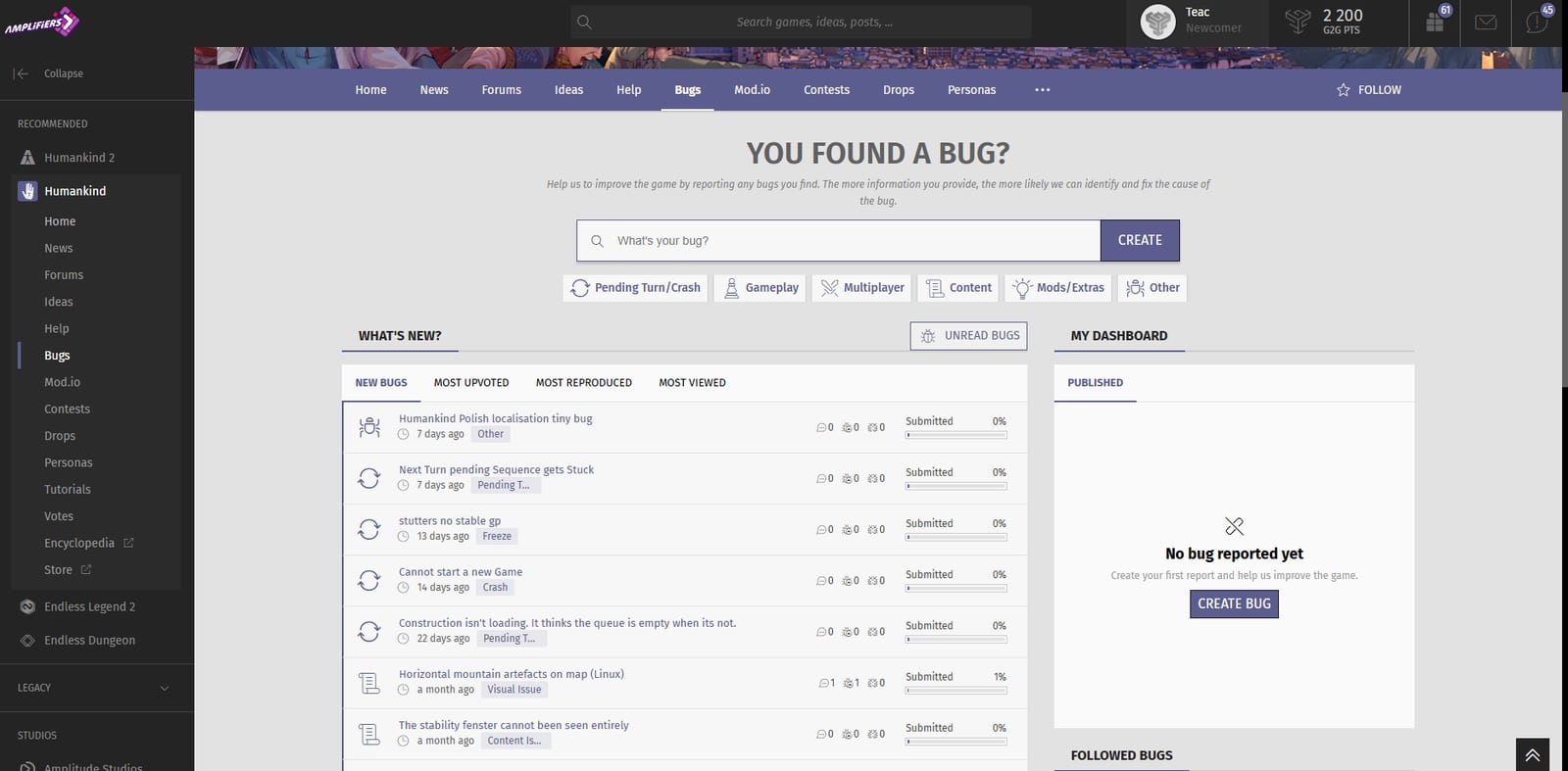
Search before you create
I put search inside the creation journey: players can find, vote on and follow an existing bug. Automatic detection alone was not enough, because the same problem can be worded in different ways.
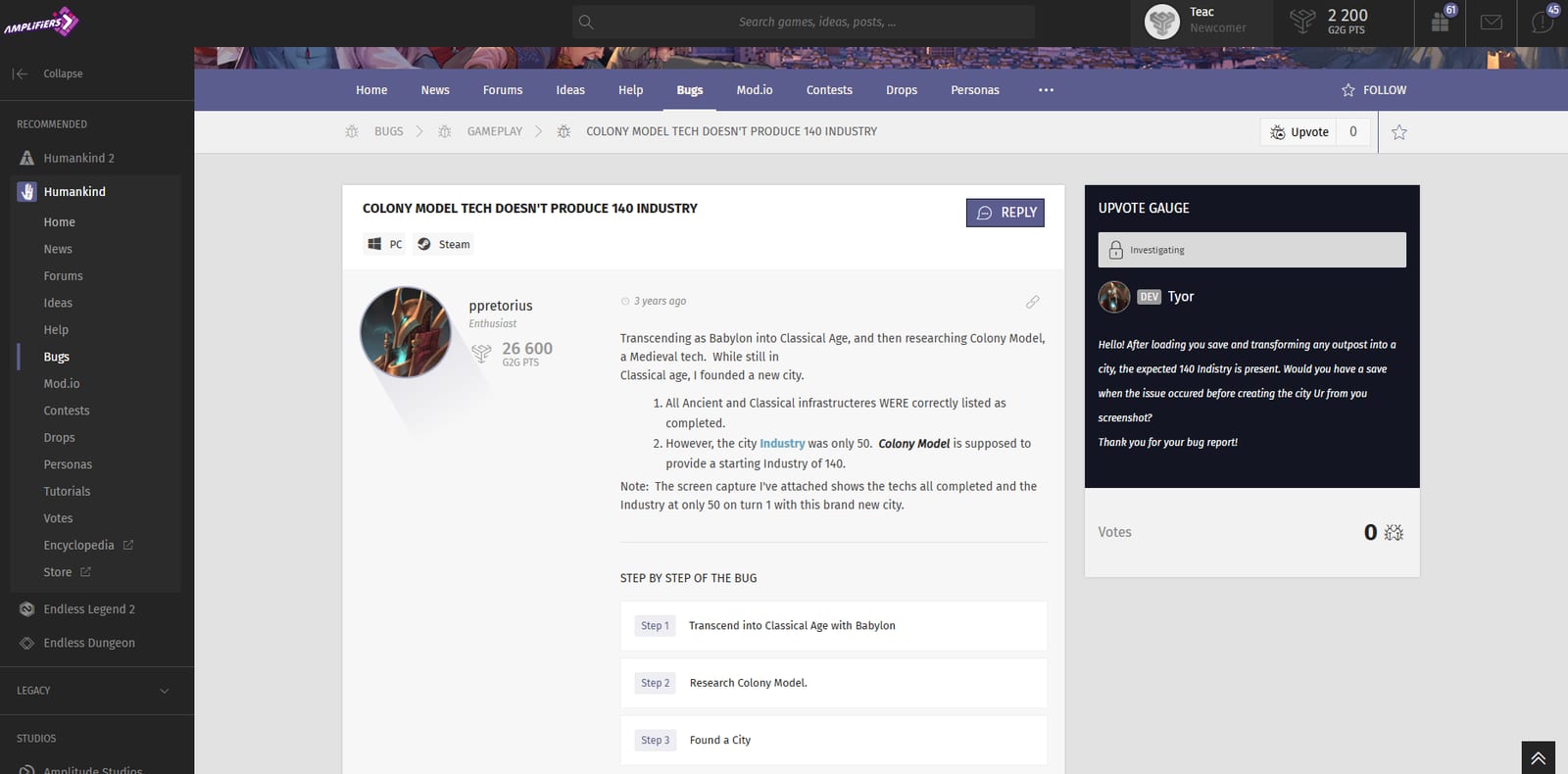
Guide the writing
Category, platform, version, reproduction and attachments: the steps follow what QA needs. We ruled out a single page with every field, to guide input without losing useful details.
Make progress visible
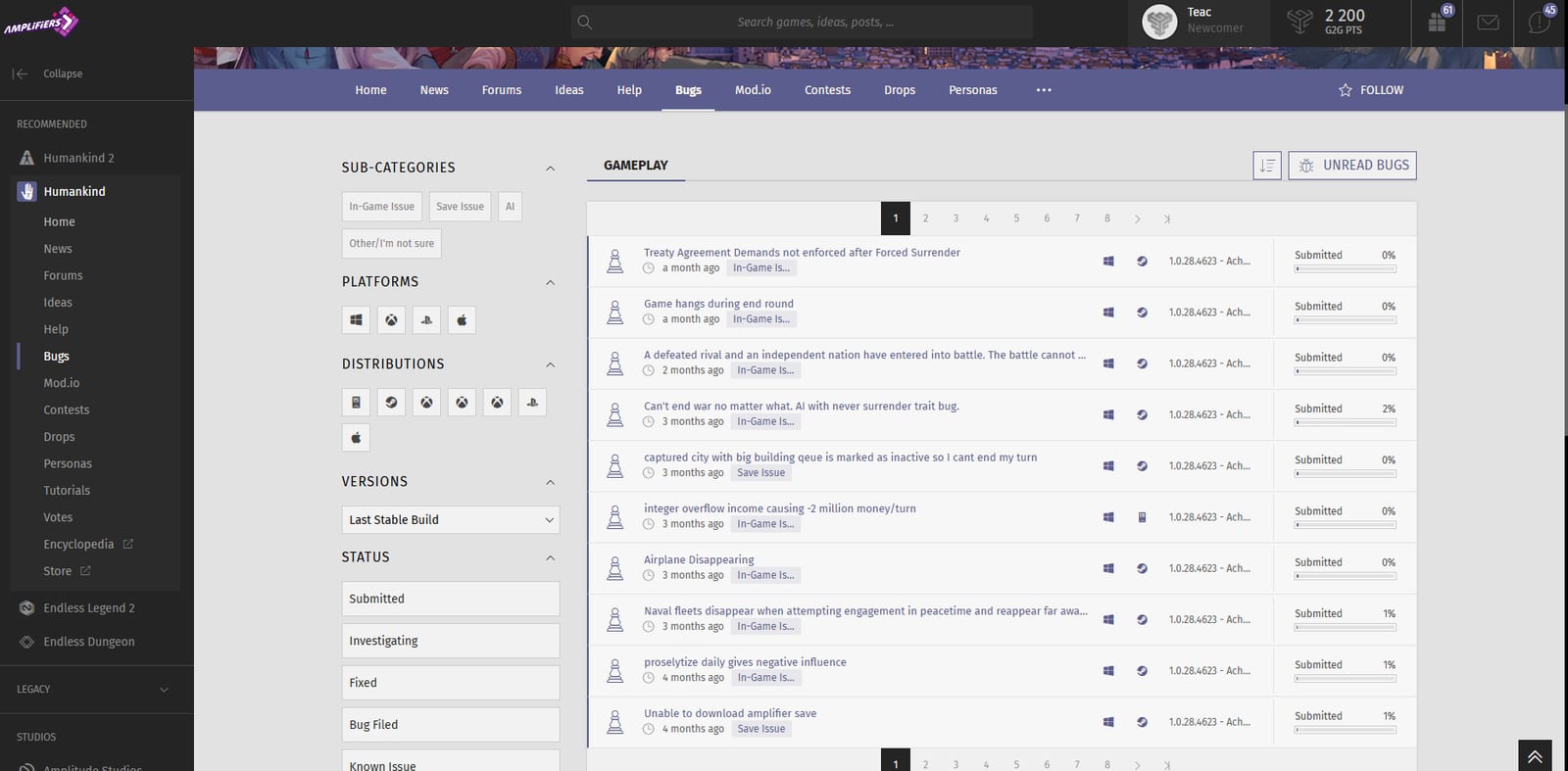
Status and votes show in the list. Players can see progress and the studio’s replies without scrolling through a discussion thread.
02For studios: a form configured per game
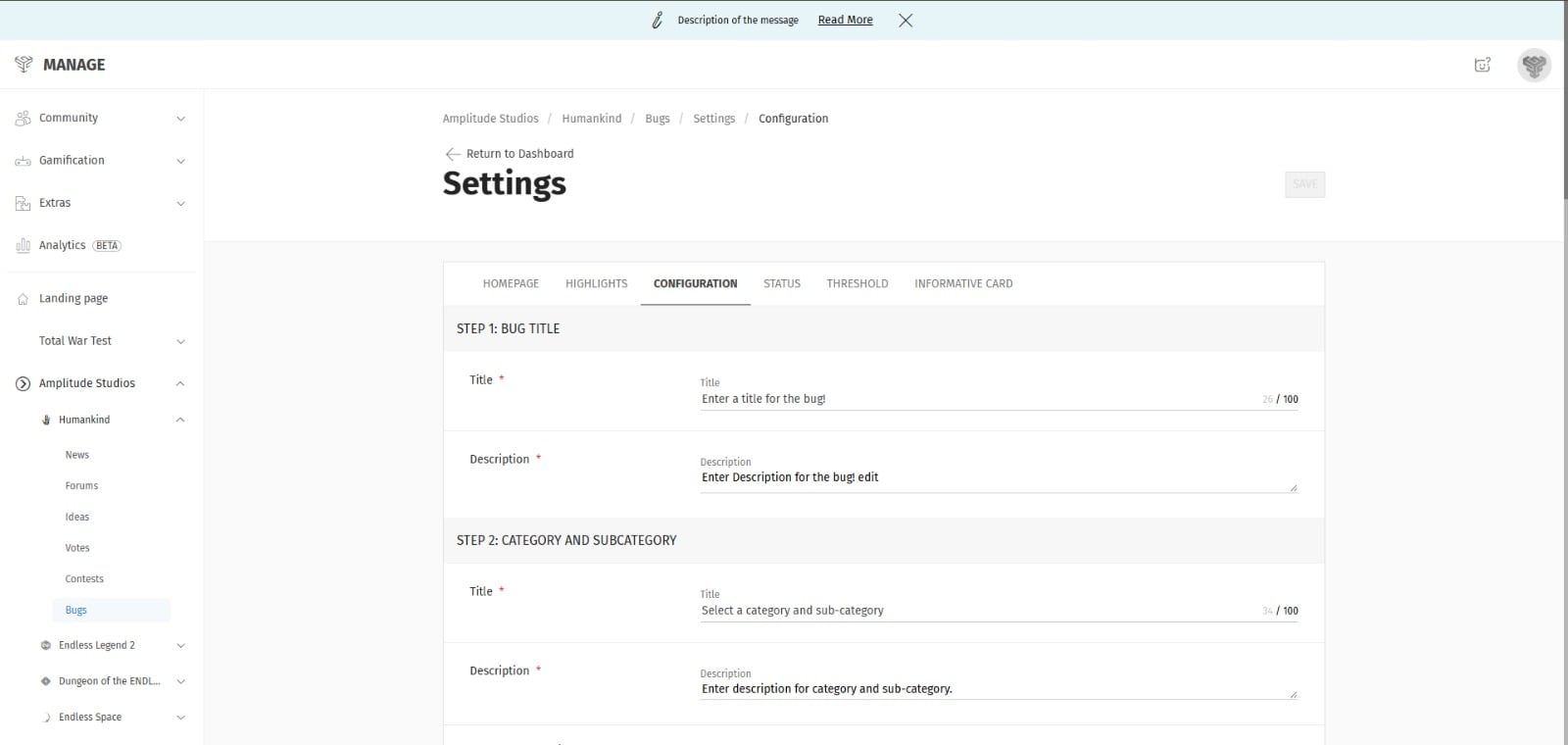
A shared framework, configurable per game
Studios do not use the same platforms, versions or files. Rather than one global form, I designed per-game settings in eight steps: instructions, visible or optional fields, accepted files.
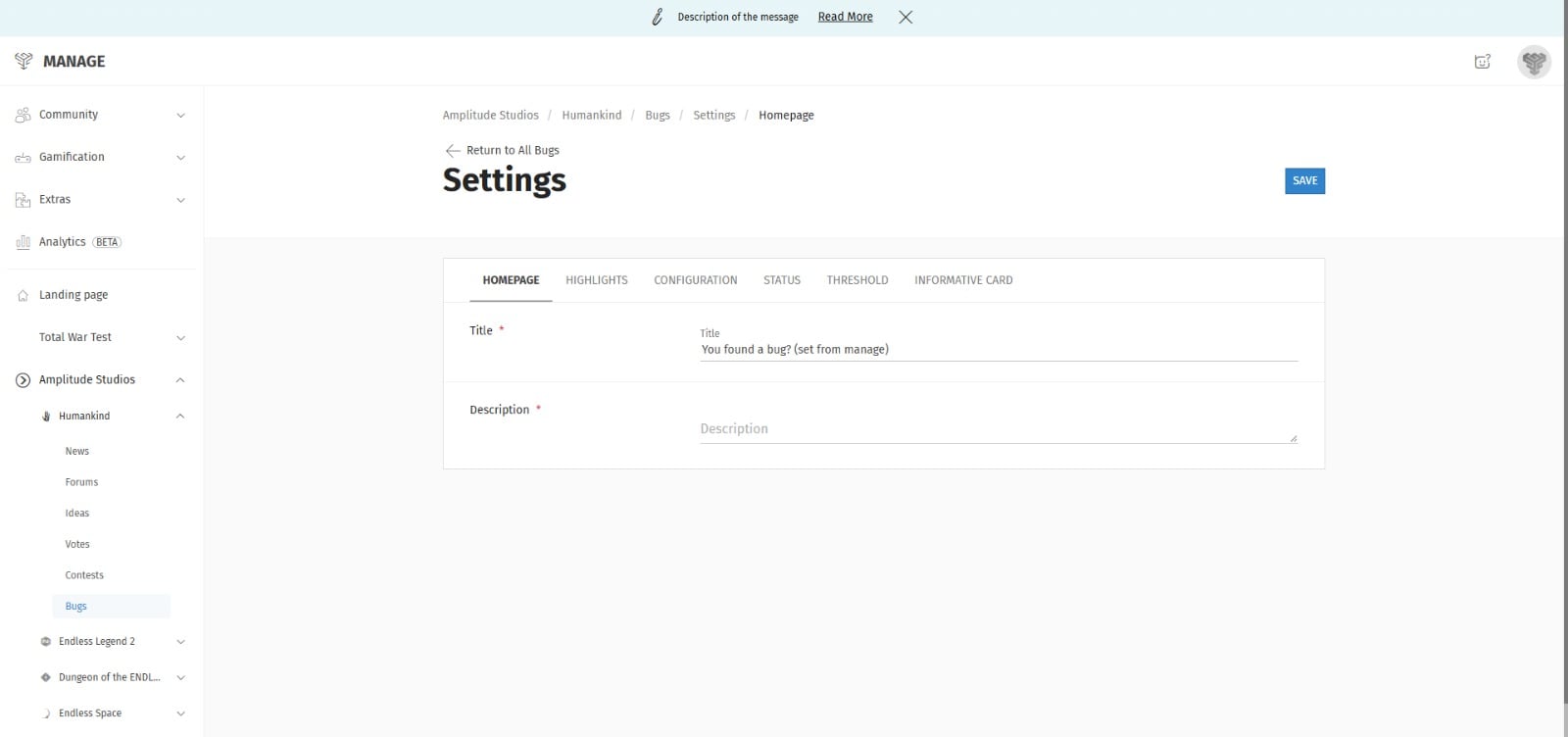
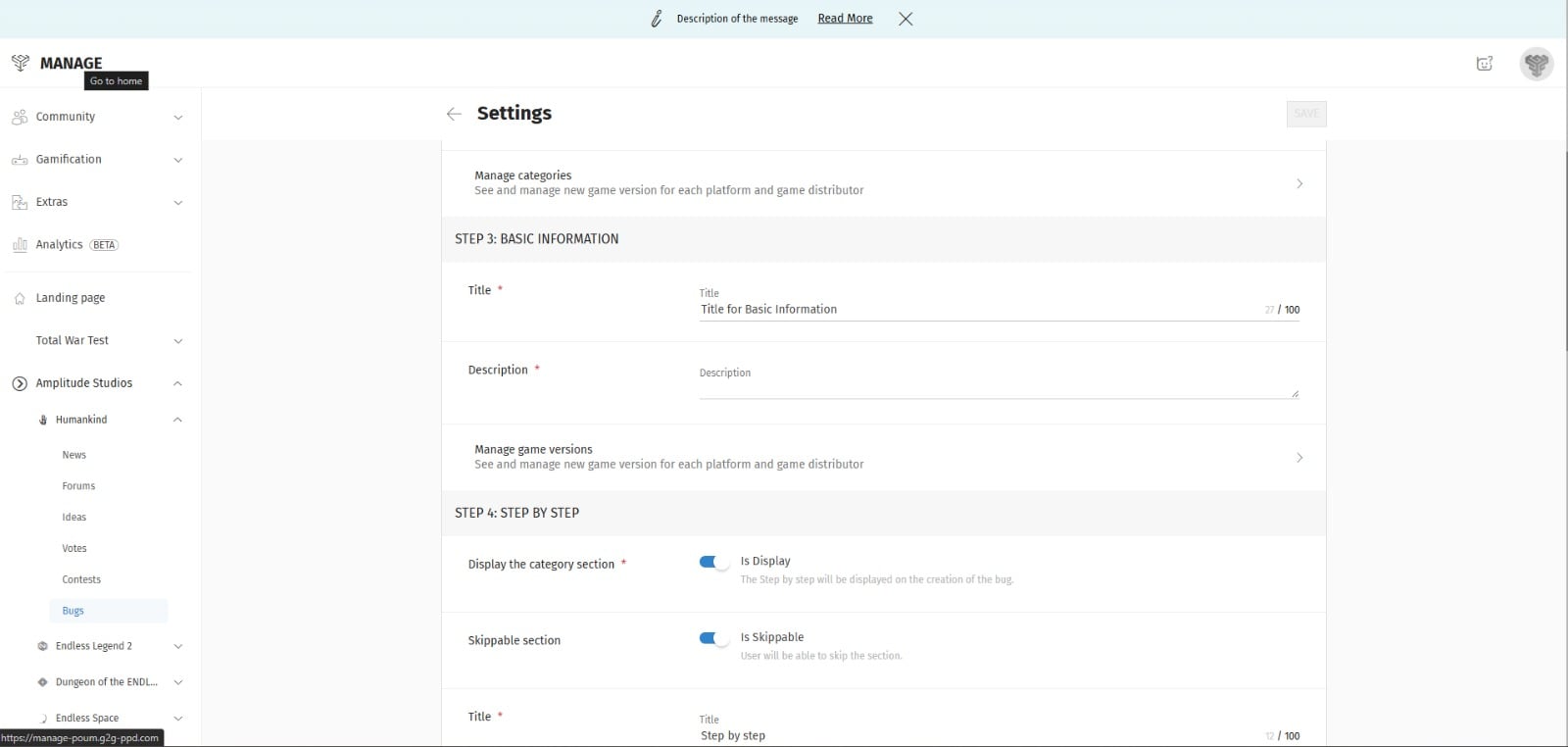
See the other configuration screens
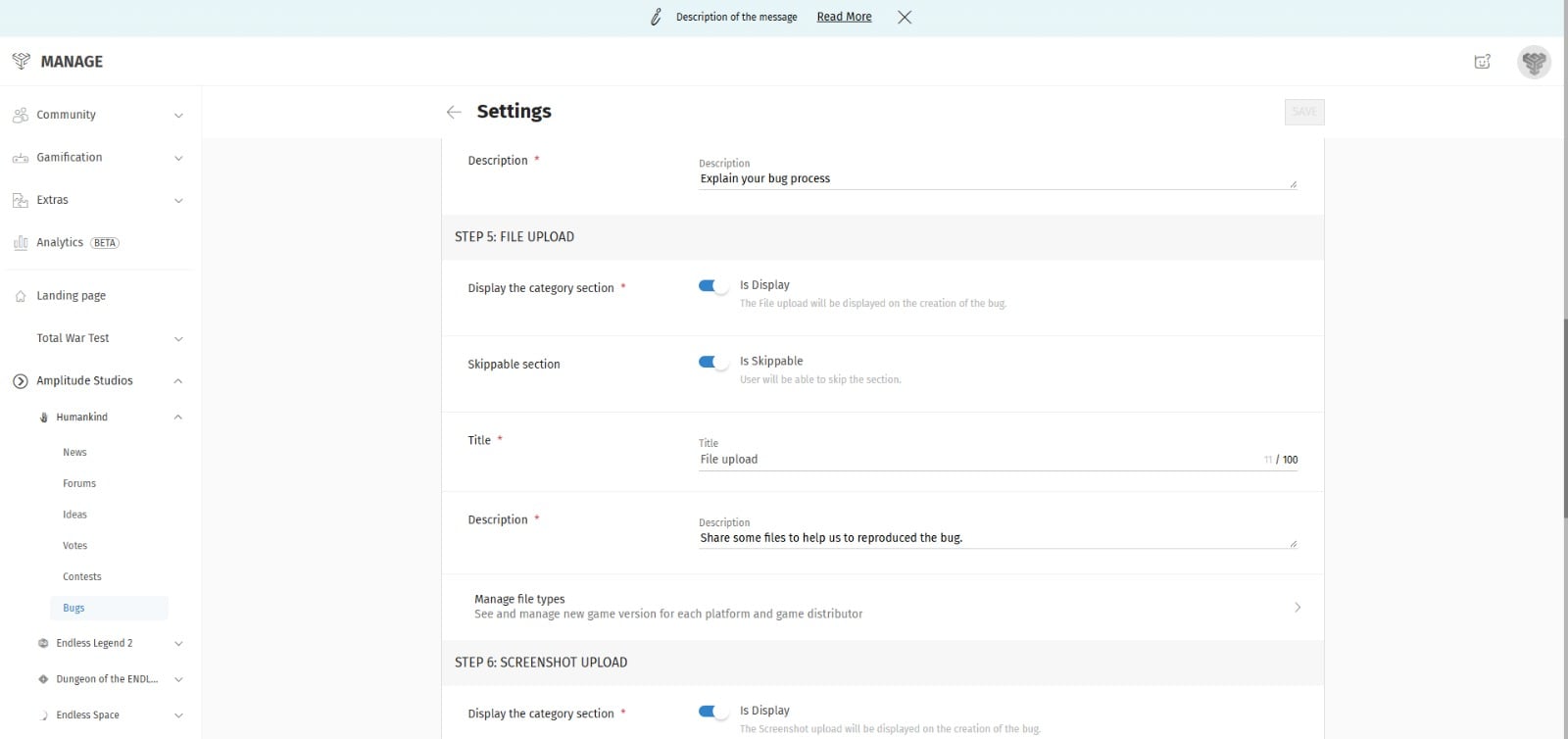
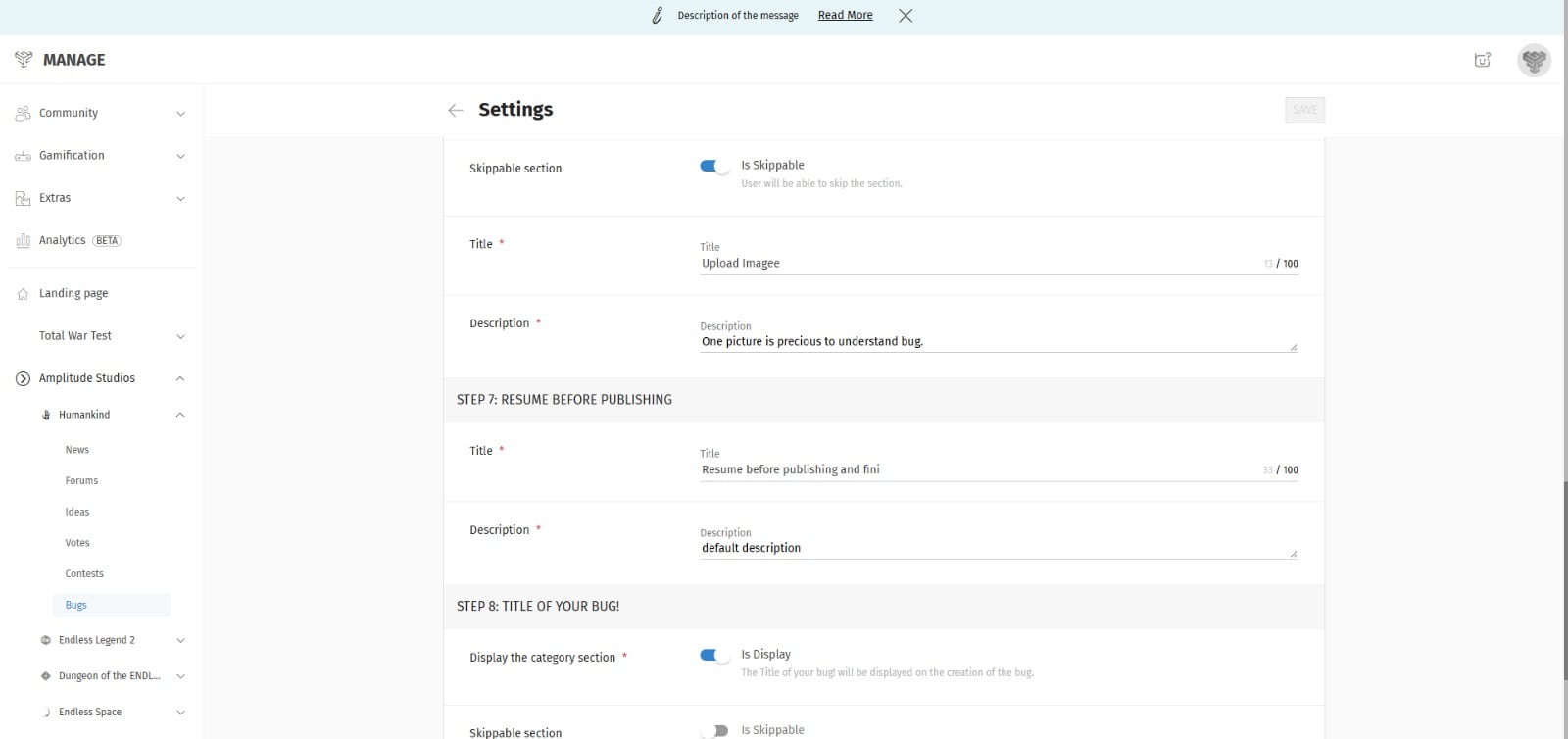
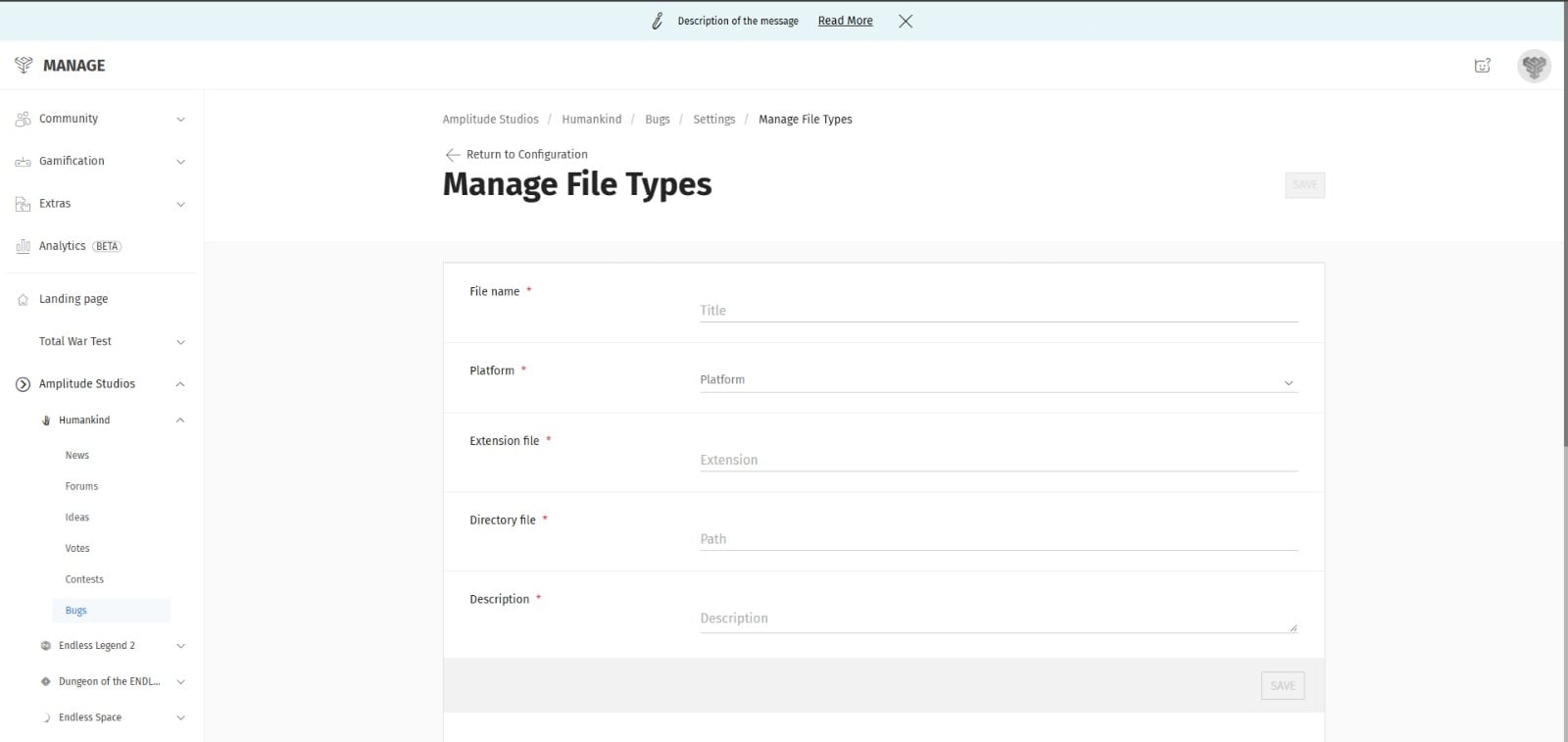
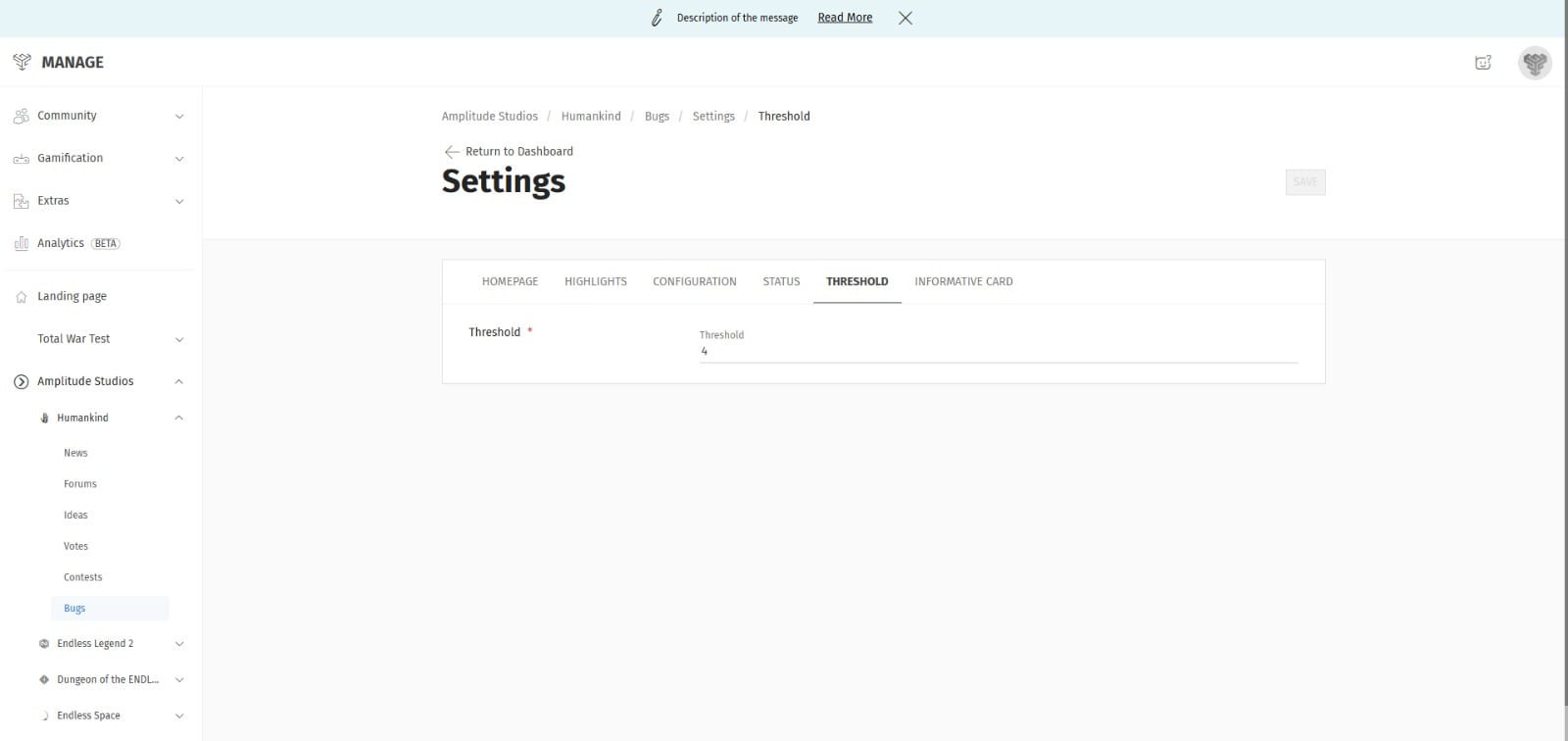
Connect the studio’s work to what players see
QA filters and exports the reports. The studio changes the status and replies from the same page, and the player finds the reply in their report.
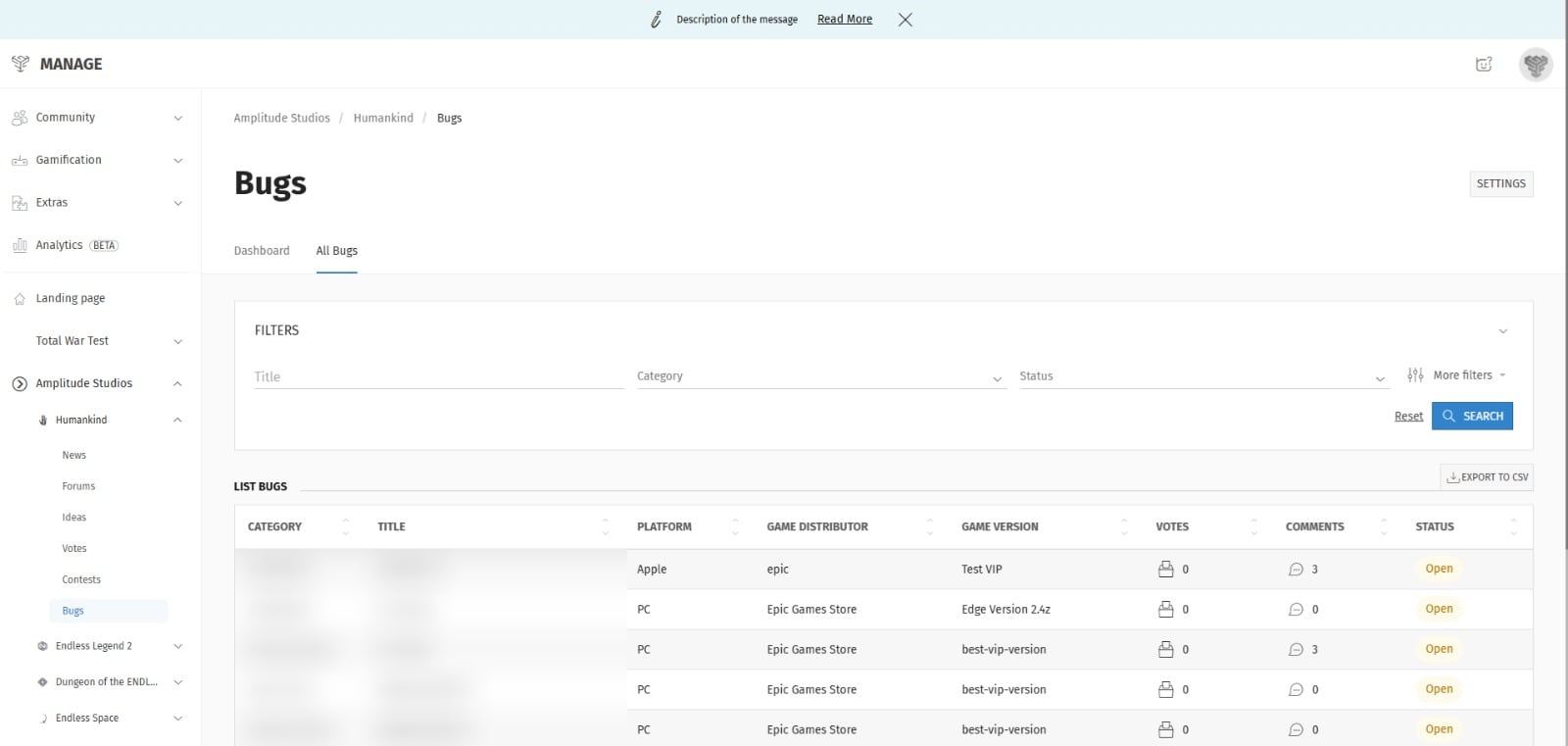
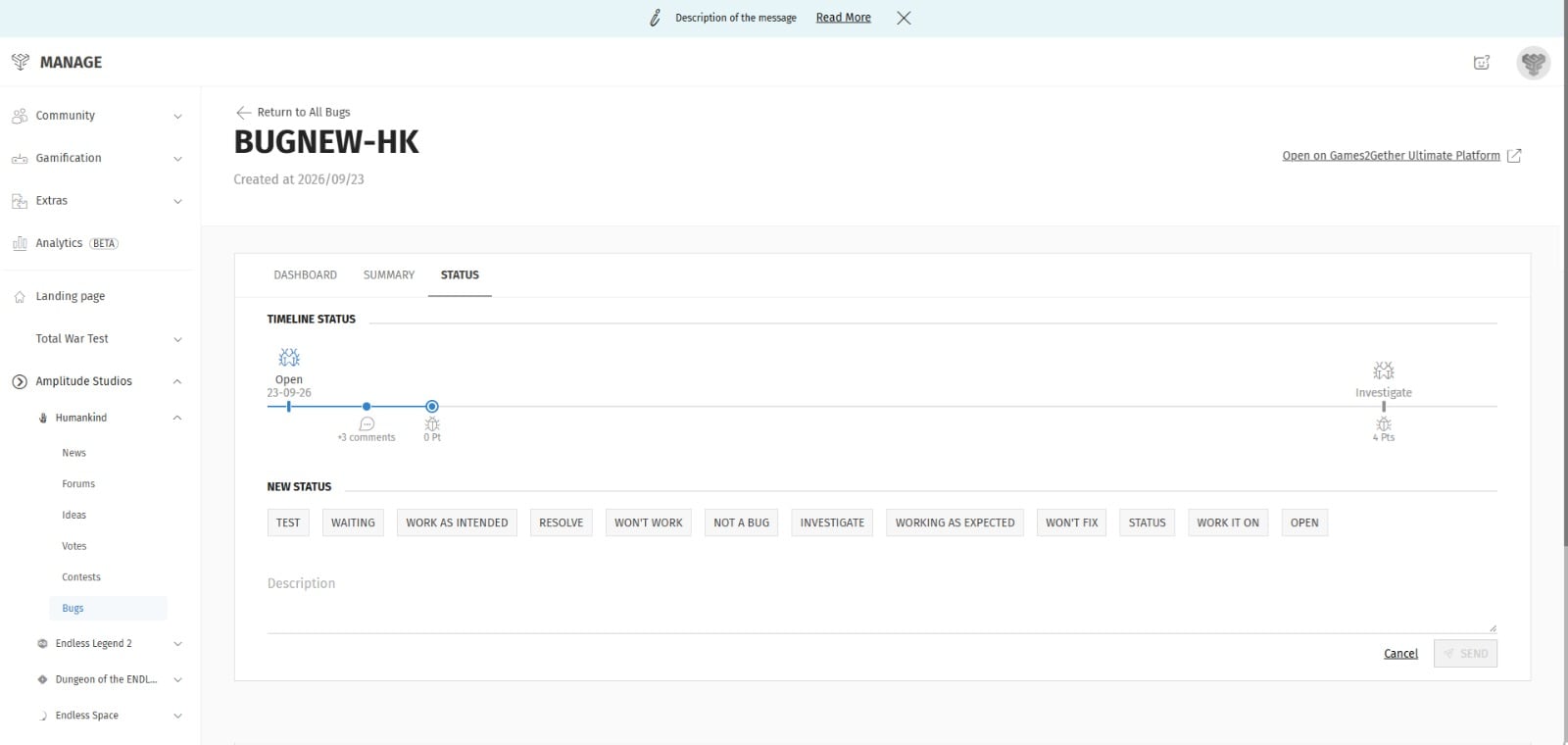
See statuses and filters
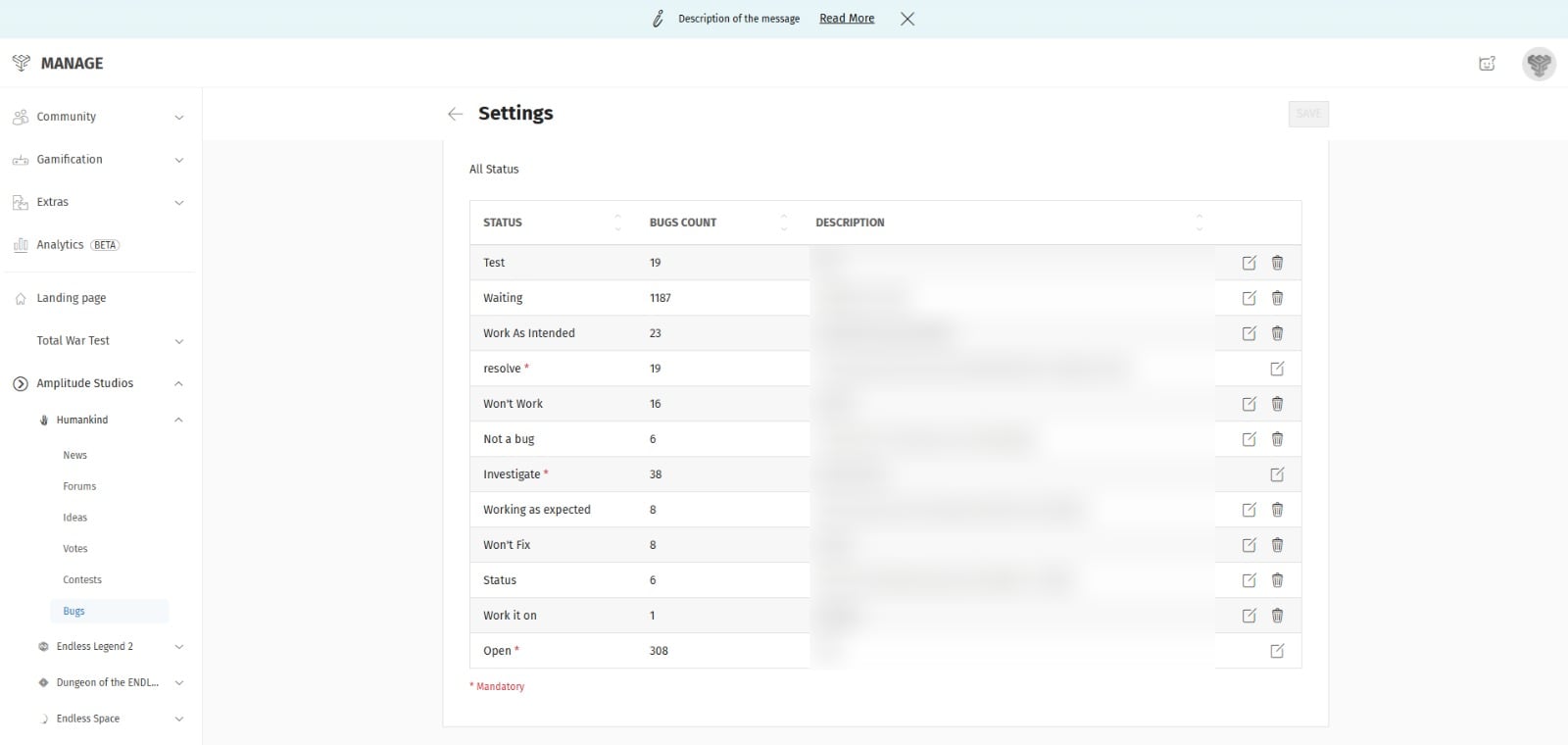
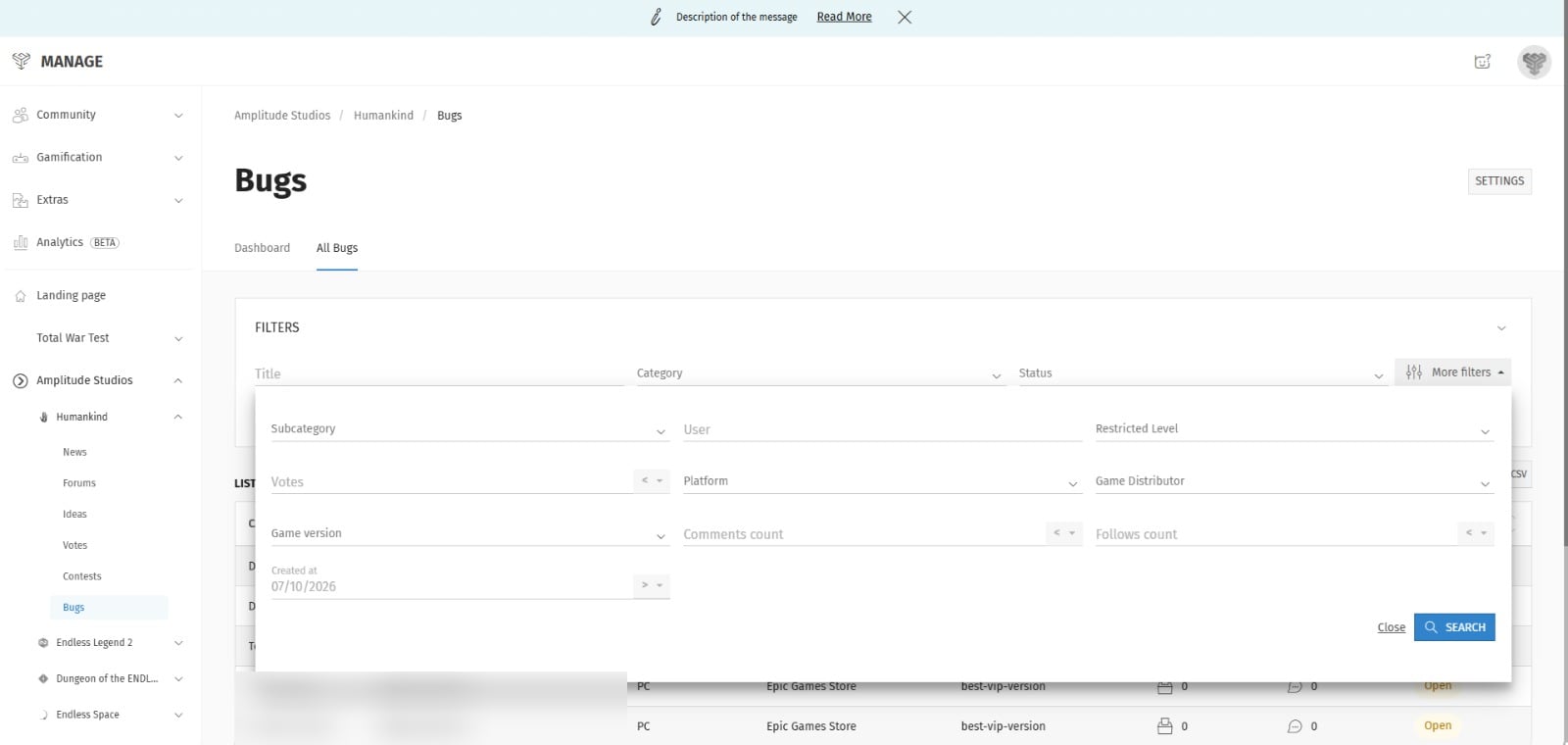
Cells containing sensitive data are blurred.
03A clearer list, after feedback
Cut-off titles and misunderstood statuses kept coming up in feedback from the team and the community managers. I reworked the list hierarchy, prepared scenarios and ran internal tests with several colleagues, then used the SUS questionnaire with the production teams. The feedback made titles and statuses easier to read.
04Results
The team’s measures at launch, comparing the old forums with the tool:
| Measure | Before, forums | After, tool |
|---|---|---|
| Complete reports, with version, platform and steps filled in | 41.8% | 88.4% |
| Duplicates, a bug already reported the same month | 27.6% of threads | 9.1% of reports, a relative drop of 67% |
| Reports receiving a first reply | 44.3% of threads | 80.6% of reports |
| Median time to first reply | 4.8 days | 1.9 days |
| Community managers' follow-ups to players | 56.2% fewer follow-ups | |
Sources: back-office export, a sample of the old threads and feedback from QA and the community managers. These before/after comparisons are not an A/B test.
Later use, public count
In a public count, 3,903 reports are counted across three games. This count describes later use, separate from the launch measures.
769 reports on Humankind, 2,517 on Endless Legend 2 and 617 on Endless Dungeon. The 3,848 old Humankind threads and the 3,350 threads of Endless Space 2, still on the forum, describe the old channels. They are not a comparison of volumes over the same period.
The 2,517 Endless Legend 2 reports cover the period since its demo, about 180 a month, and 14 were posted in the 48 hours before the reading. These windows are not comparable to the periods of the other volumes.
Nine statuses are in use: Submitted, Investigating, Fixed, Known Issue, Bug filed, Needs more info, Can not reproduce, Working as Intended, Resolved in a future build. Together with votes, they show how the tool works.
Each studio sets its own vote threshold. Two gauge examples: 19 votes and 19% on Humankind, 43 votes and 860% on Endless Legend 2. These percentages measure neither a conversion nor a fix.
05What I learned
I would track complete reports, duplicates and time to first reply over time. I would also test the configuration with a community manager discovering a new game. Maze and Hotjar were not used on this project.