Prototypes and ideas
The first prototypes were made with AI, then tested on a phone. Feature ideas explored with ChatGPT were sorted before being designed.
← Home·Case study
B2C · Android app · Side project
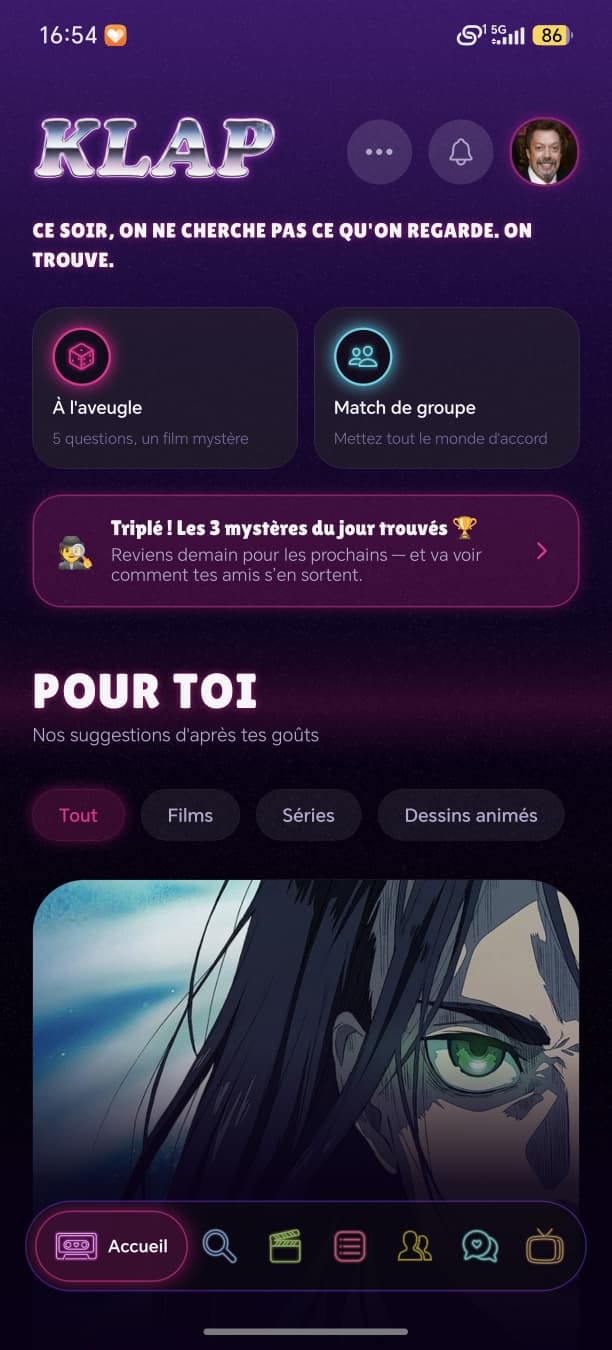
An Android app for deciding what to watch tonight, alone or together, designed and released in one month.
The problem
Deciding what to watch tonight, especially together, when refusals block the choice.
My role
Personal project designed alone, from concept to release.
My approach
Guide by the mood of the moment, use the reasons for a refusal, test with about 50 pieces of feedback.
The result
Released on Google Play one month after the first mockup.
I used AI to prototype, work on the interface copy, keep the visual identity consistent and create the logo and animations. I set the frame, compared the proposals and validated each version.
The first prototypes were made with AI, then tested on a phone. Feature ideas explored with ChatGPT were sorted before being designed.
I shared Klap’s colour codes with the AI, with instructions for each request. The visual identity stayed the same, screen after screen.
The interface copy was worked on with AI, in a casual voice with a touch of humour, then reviewed to stay clear.
The neon logo and the app icon were worked on with Higgsfield. The interface animations and the welcome video were made with AI.
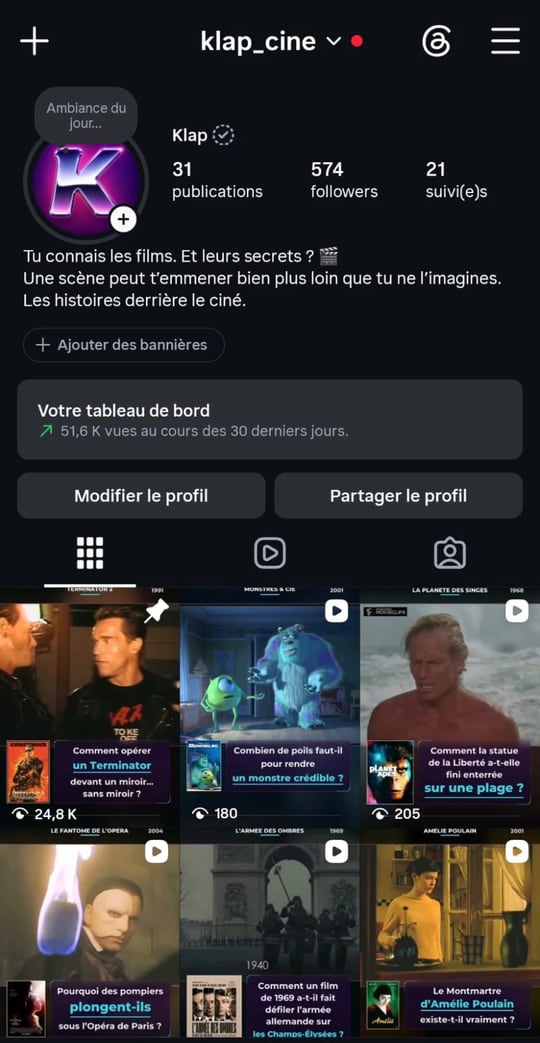
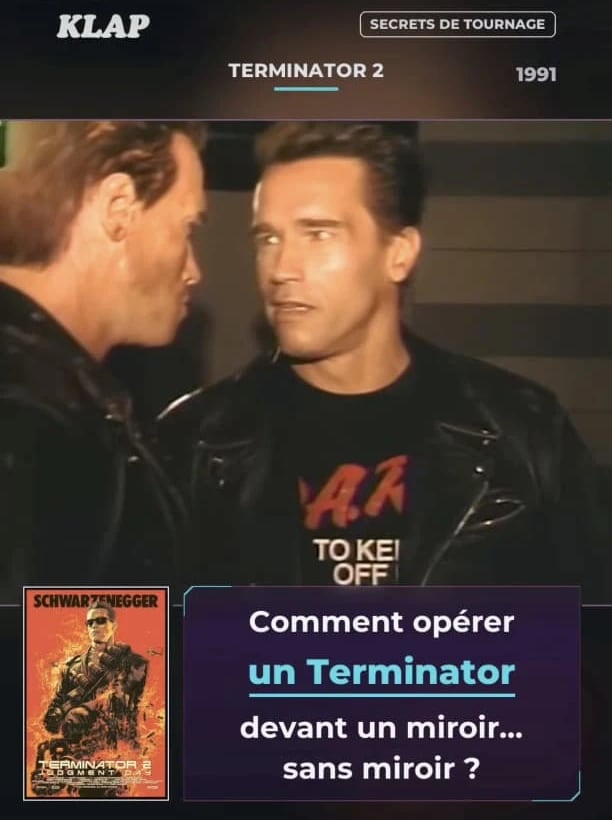
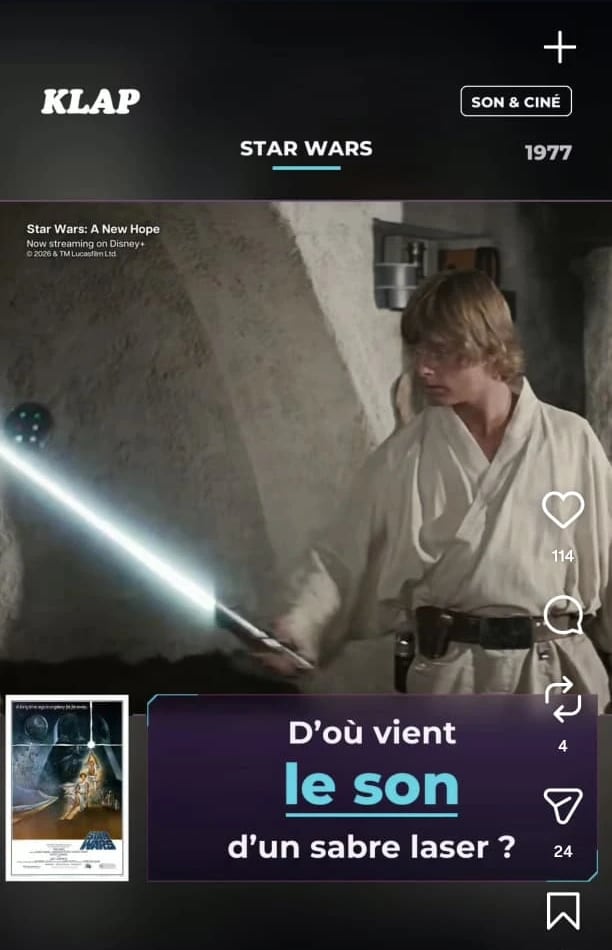
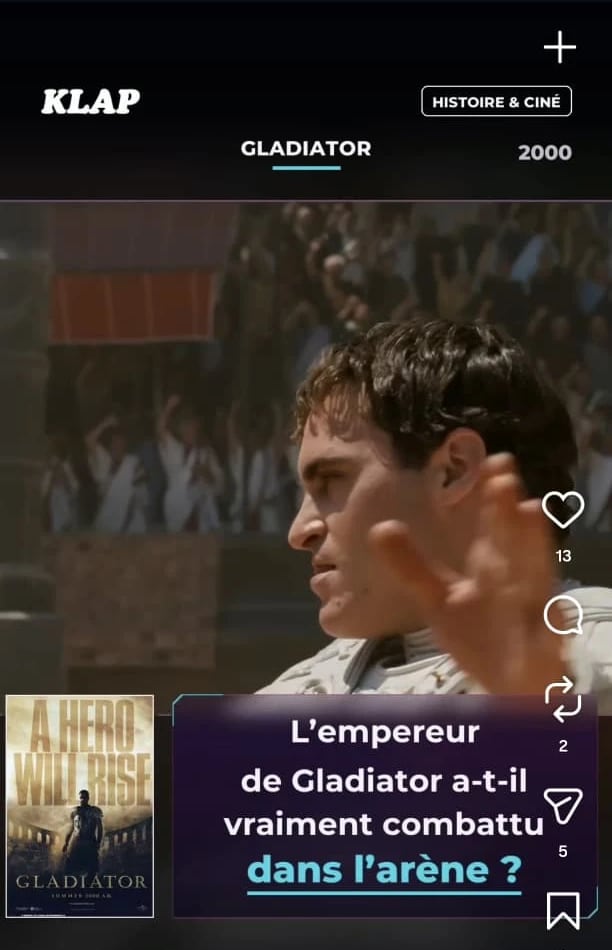
Videos and carousels about cinema are produced with Claude and Codex for Instagram, TikTok and YouTube. At one count, the @klap_cine account had 574 followers and 51,600 views over 30 days.
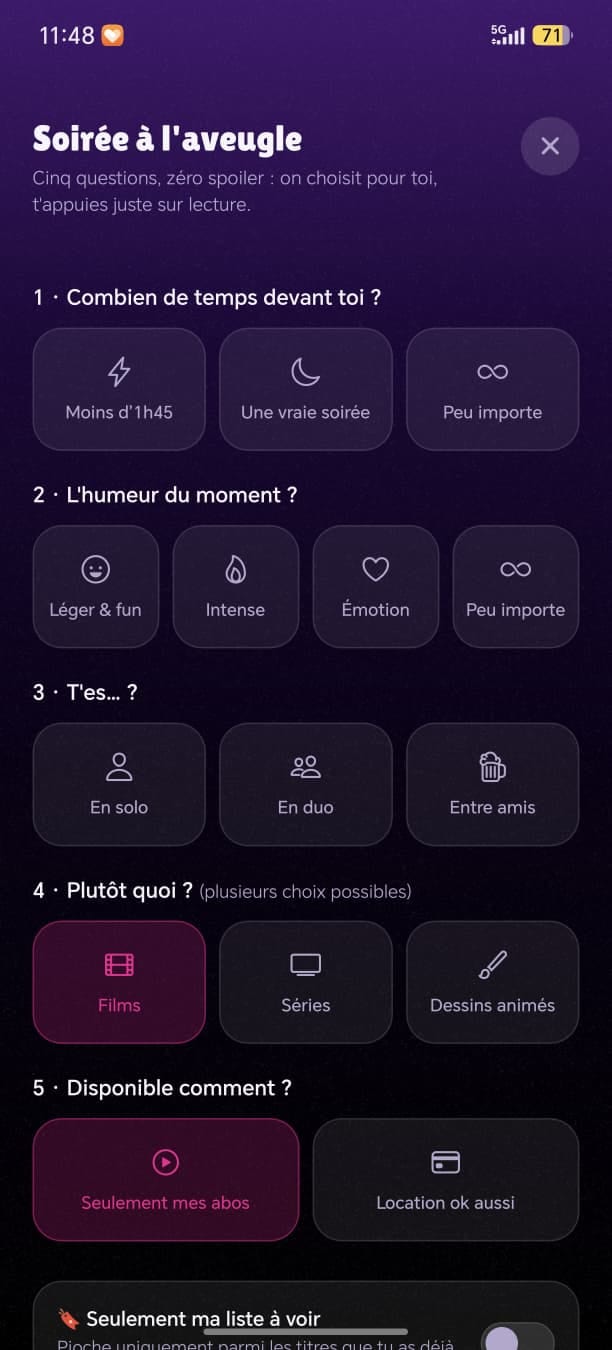
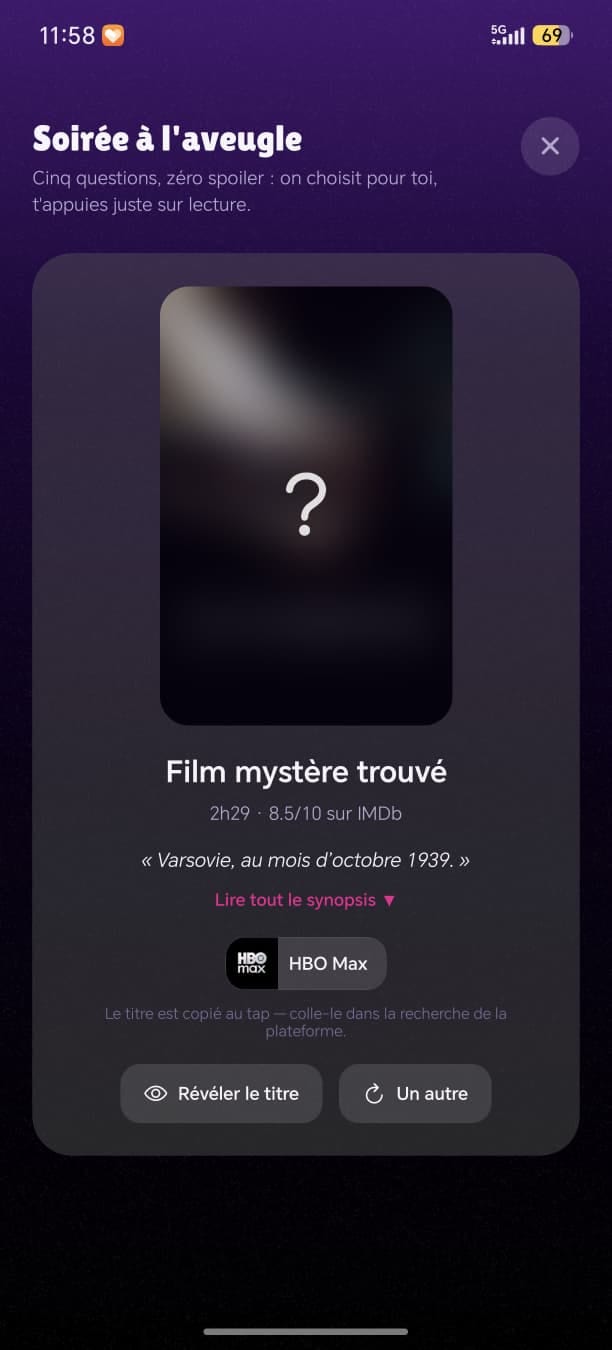
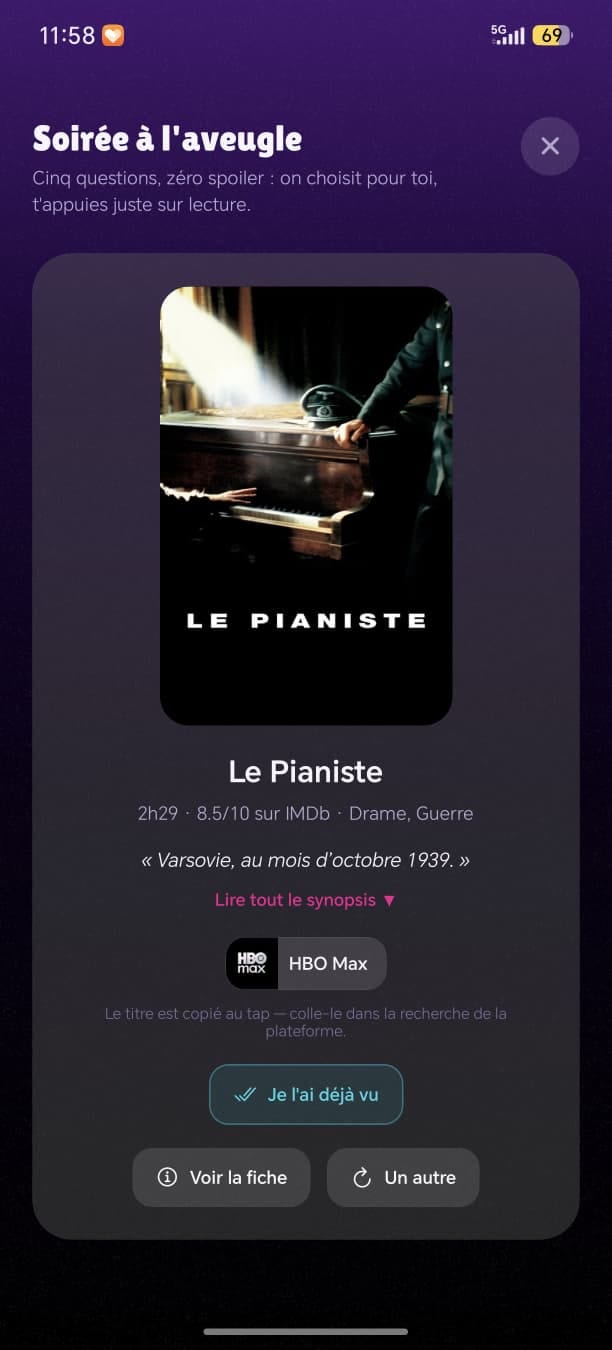
Five filters set the time available, the mood, the company, the format and the platform. The synopsis comes before the title, to limit the reflex of rejecting a film because of its poster. I ruled out pure randomness, which took little account of the evening.
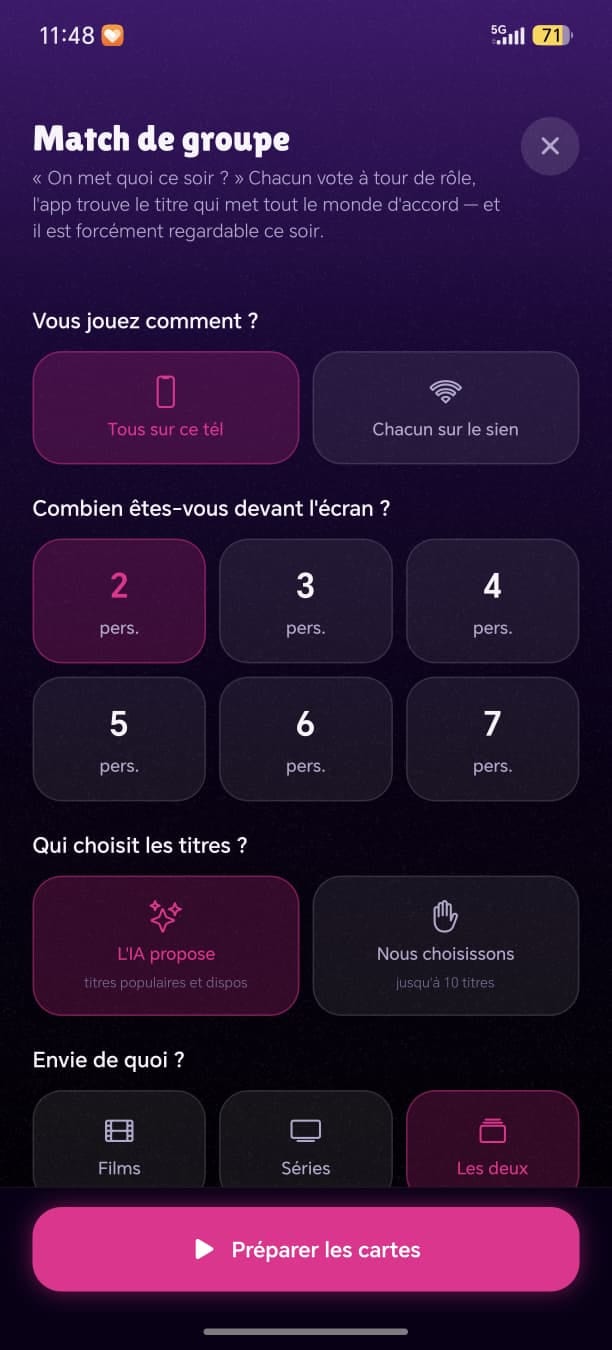
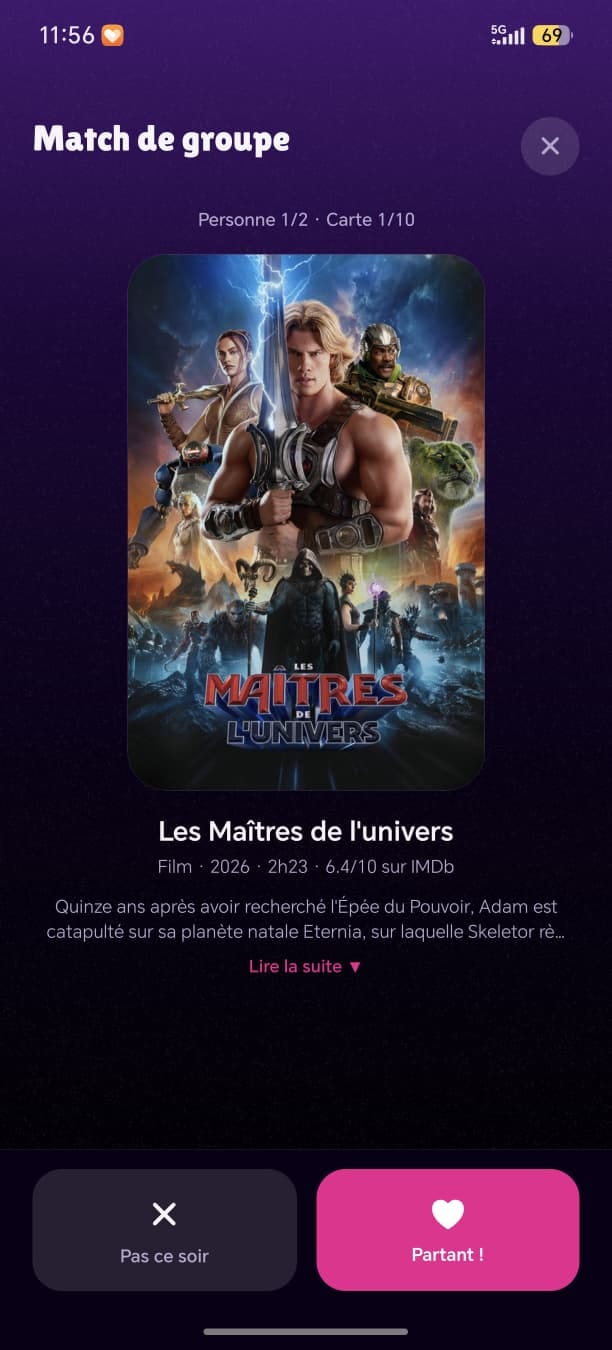
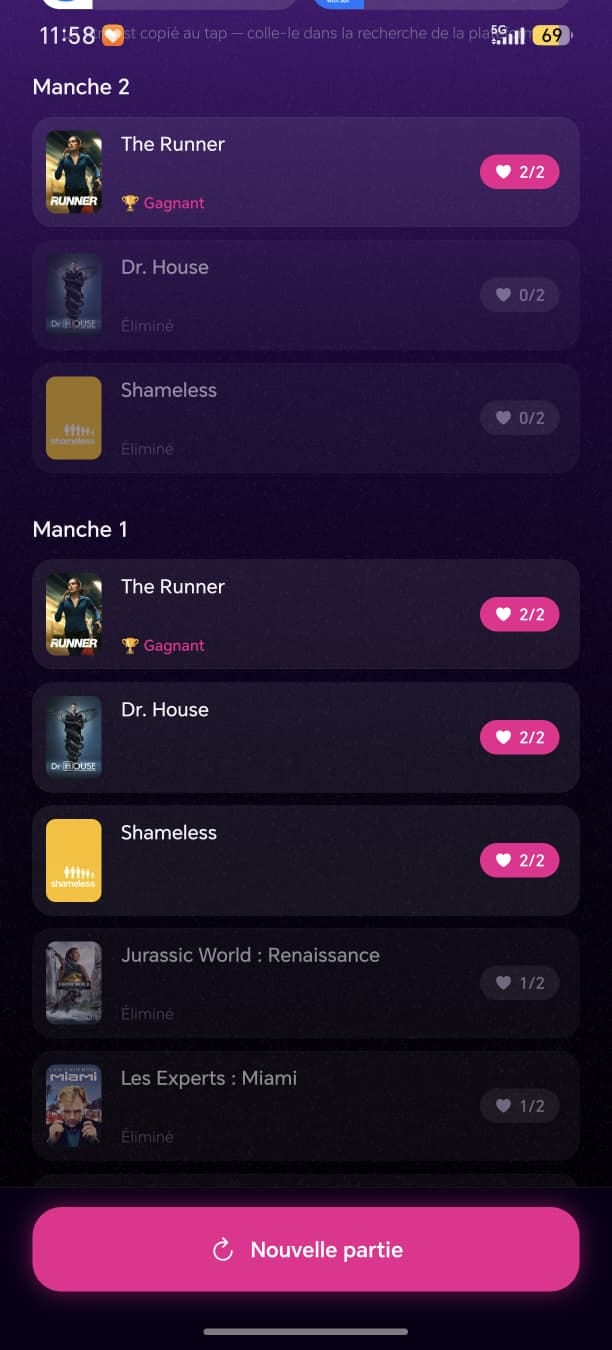
From two to seven people, each person gives an opinion on one card at a time, without seeing the previous votes. A refusal states “seen it”, “later”, “too long” or “not my genre” to steer what comes next. A new round decides between the titles everyone agreed on.
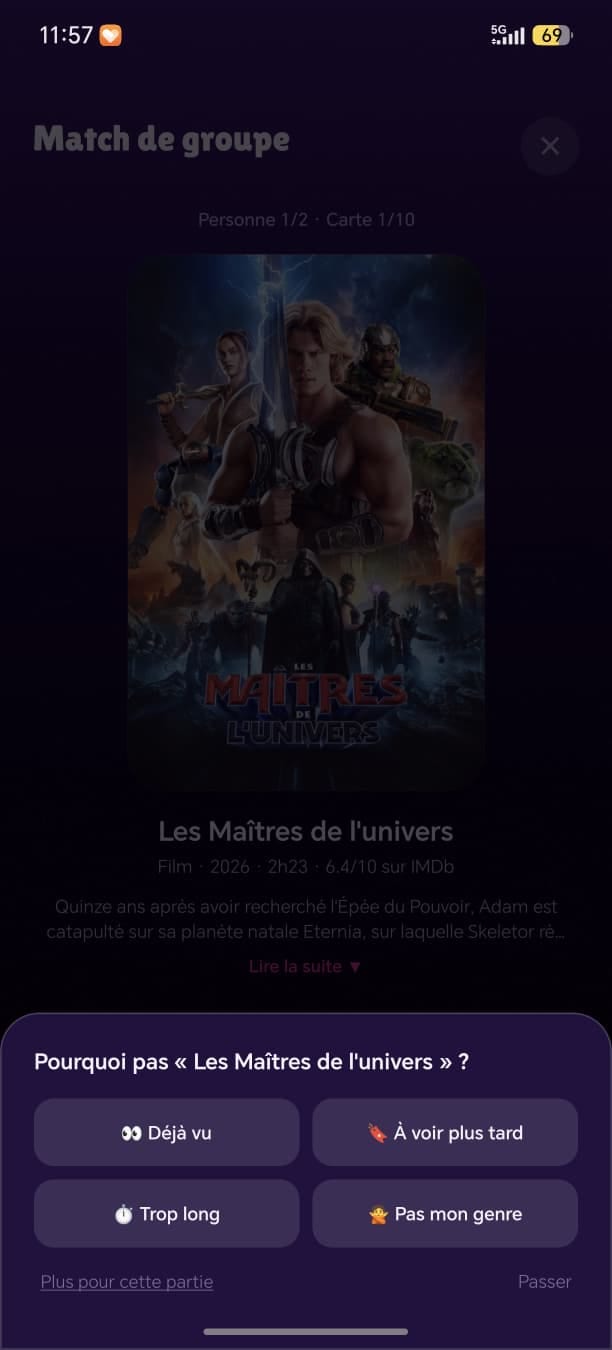
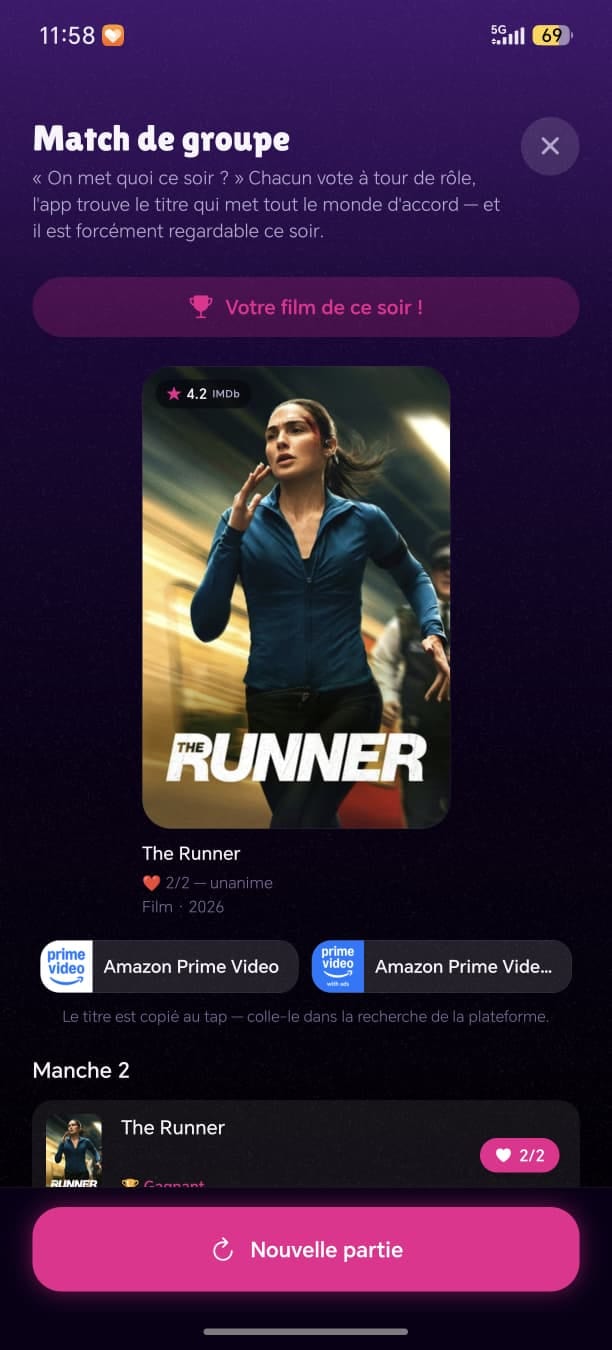
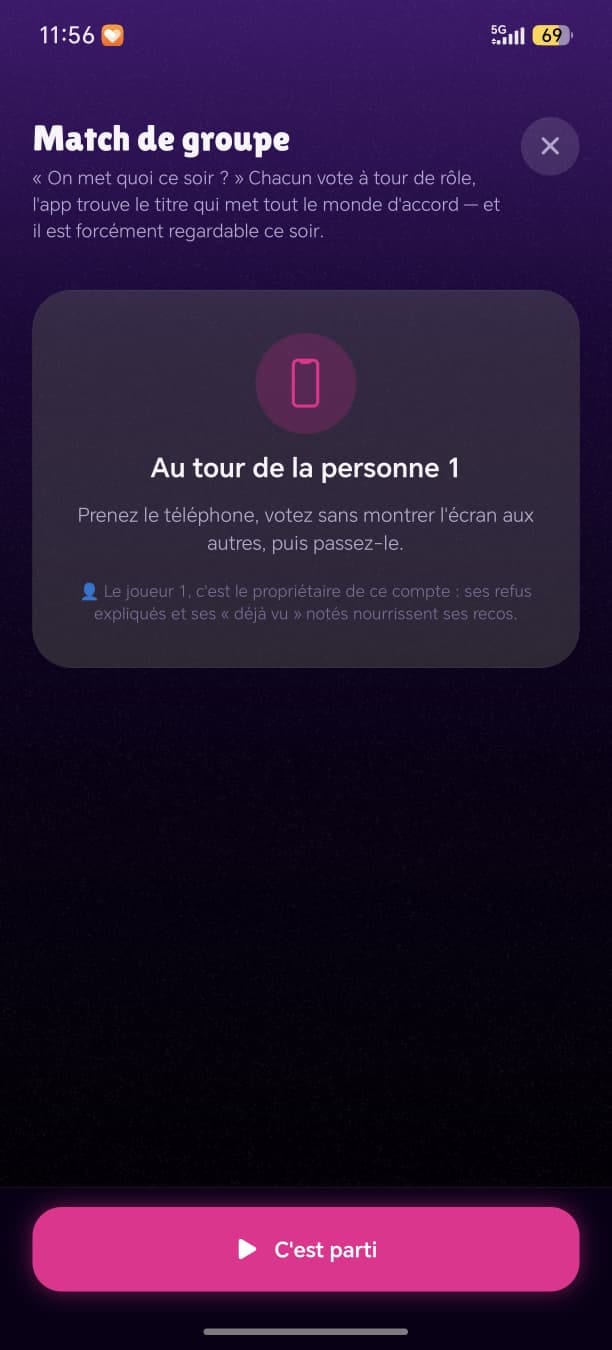
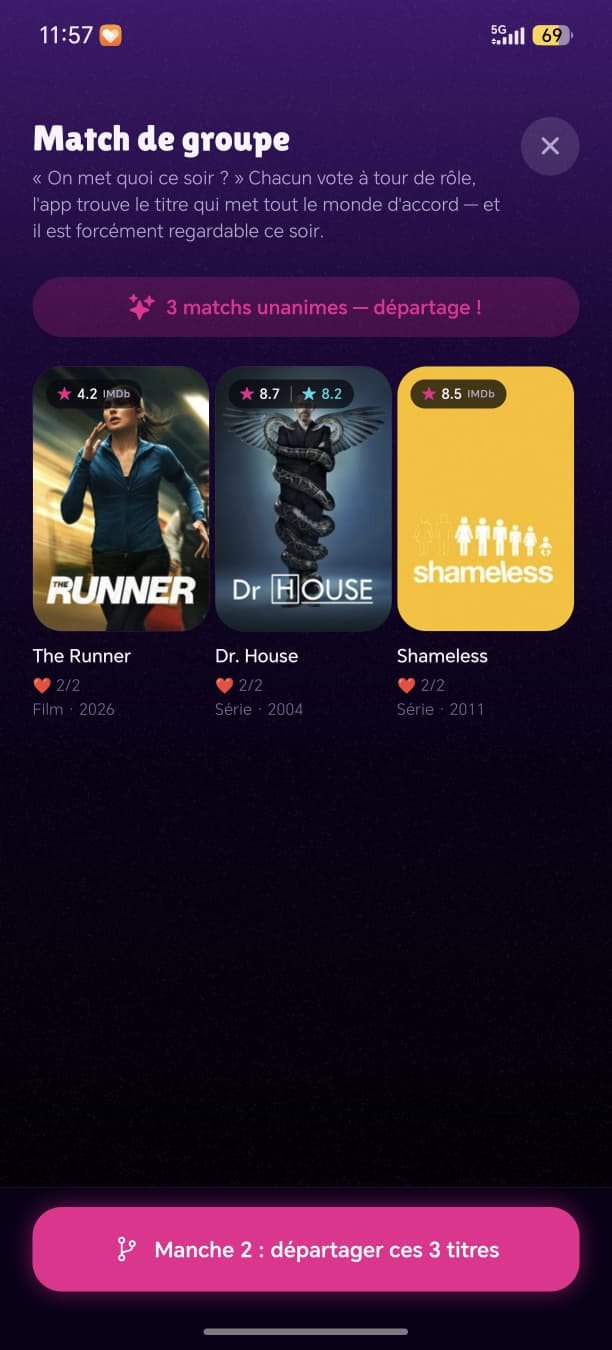
The library completes these two journeys: watched, ratings, watchlist and physical collection.
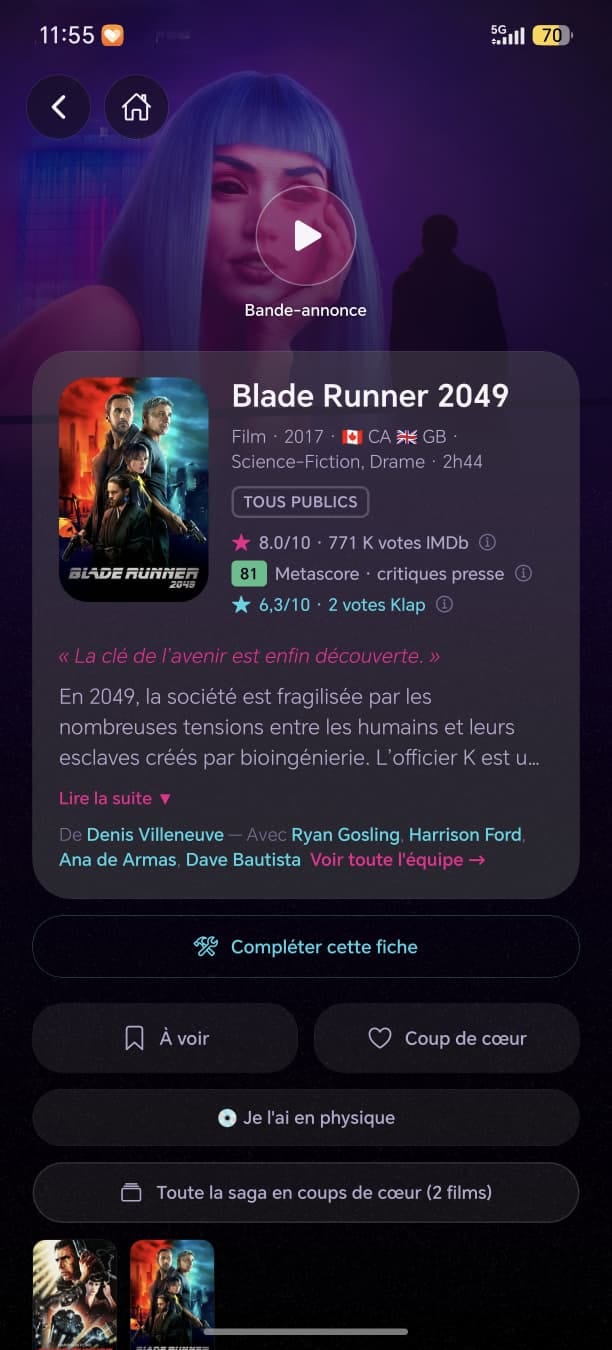
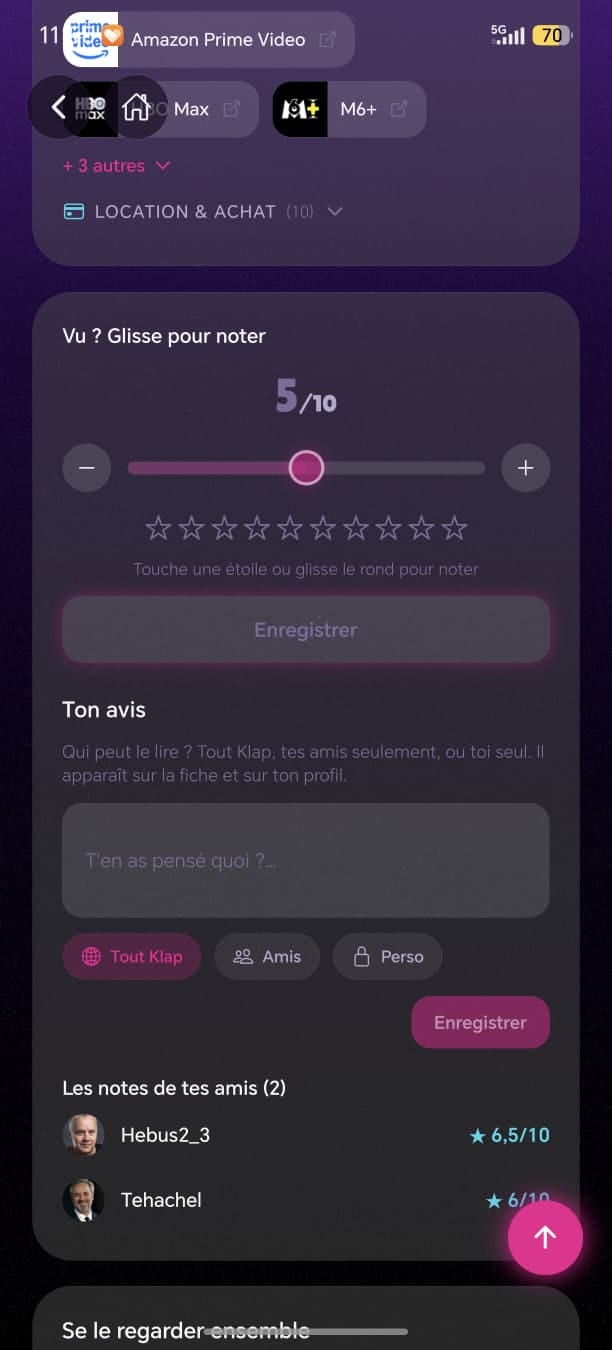
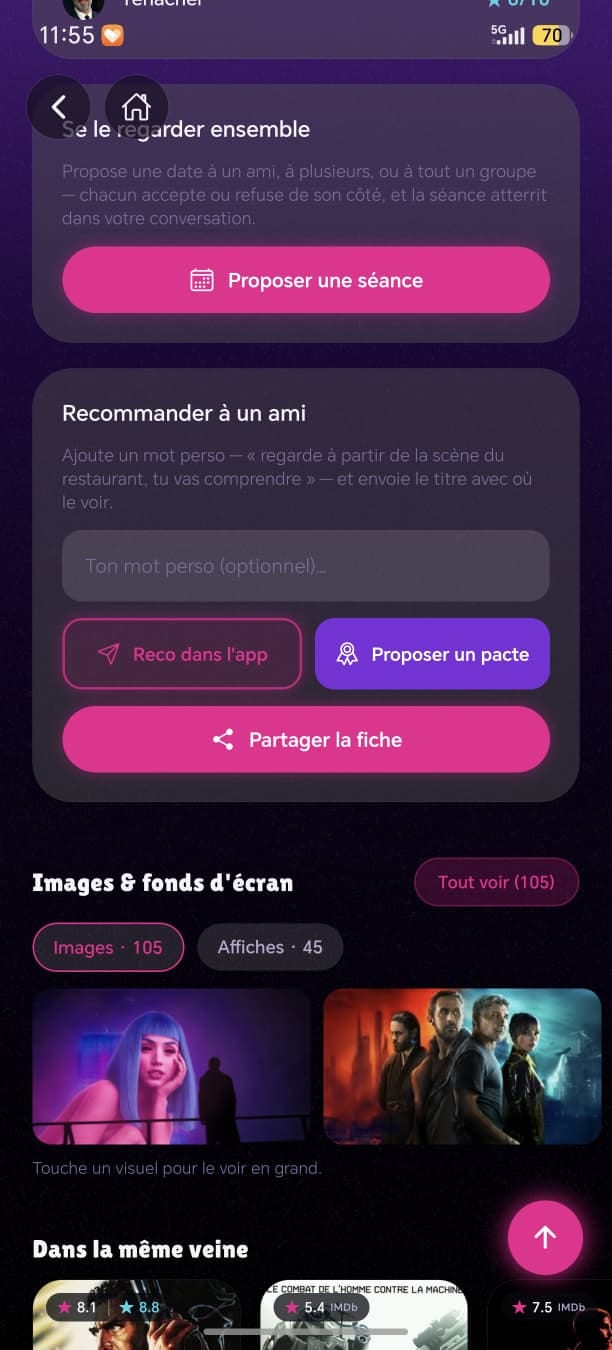
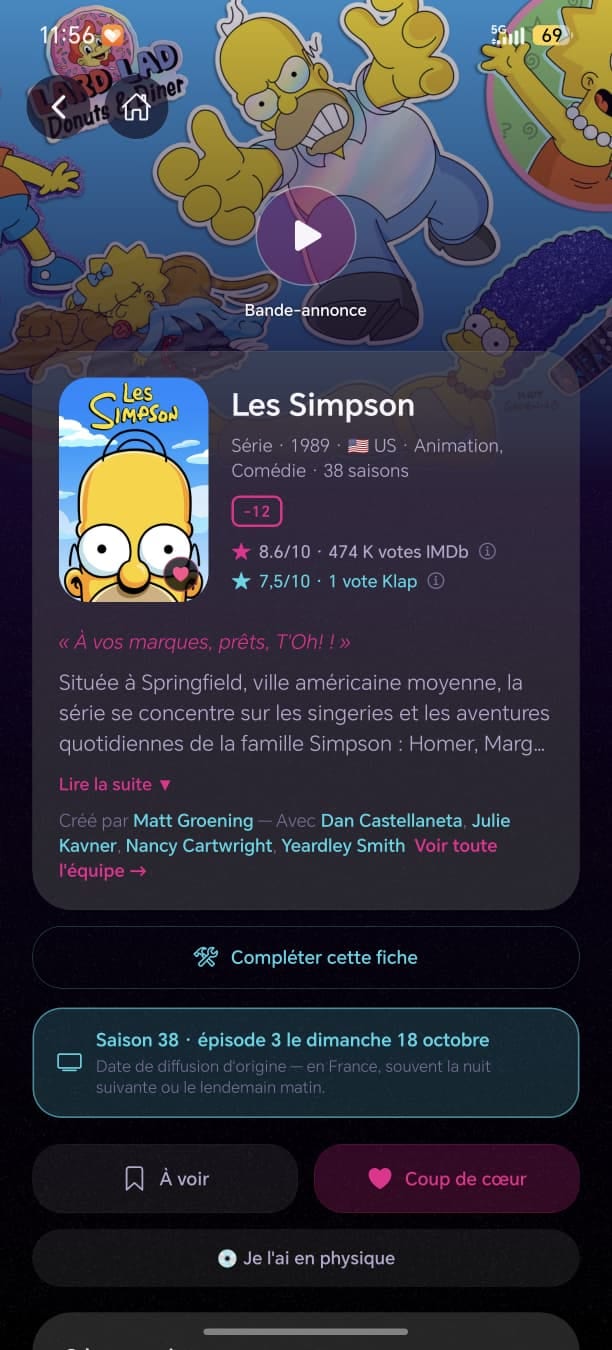
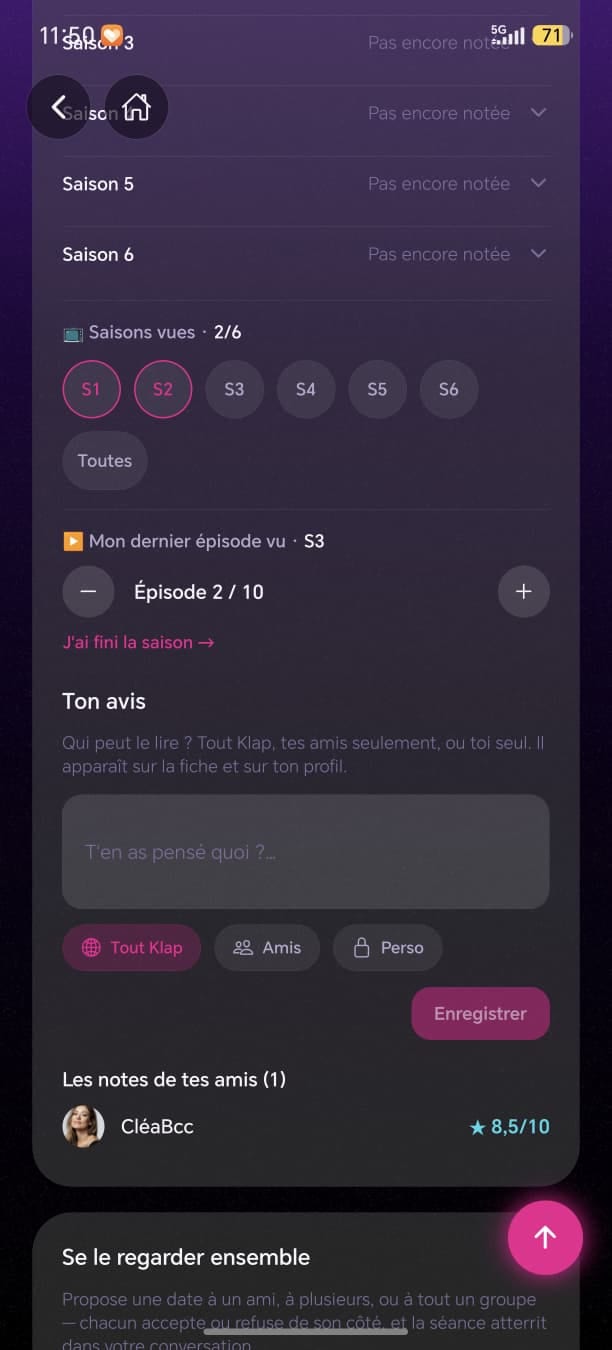
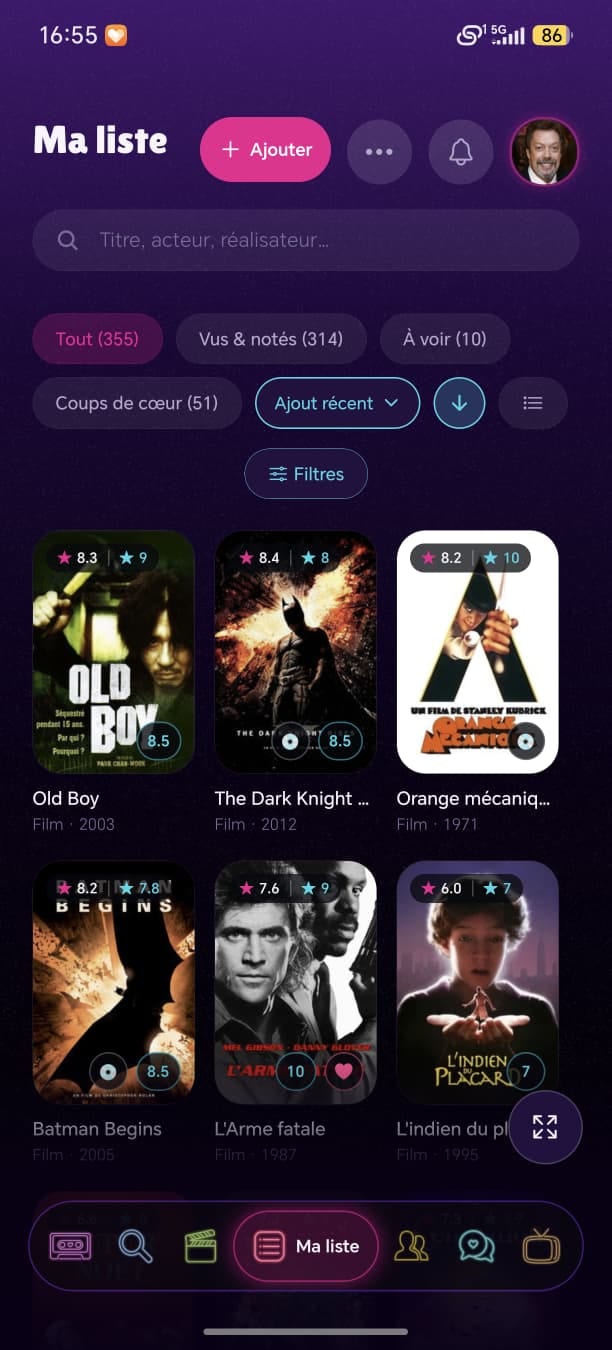
People close to me tested several Android versions during their evenings. Around fifty pieces of feedback were built in over the versions.
These trials brought out the need to rate faster, to tell seasons apart and to find one’s discs. This circle of testers does not represent the whole target audience.
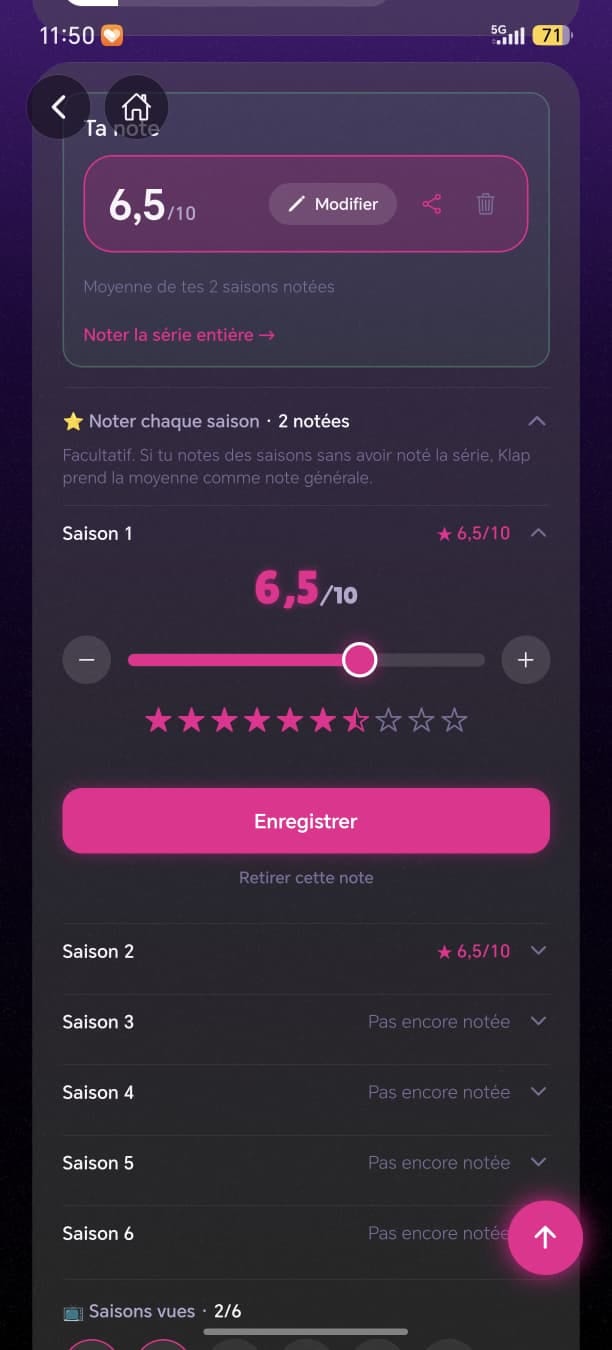
Before: a single rating for the series. After: optional ratings per season, whose average forms the overall rating.
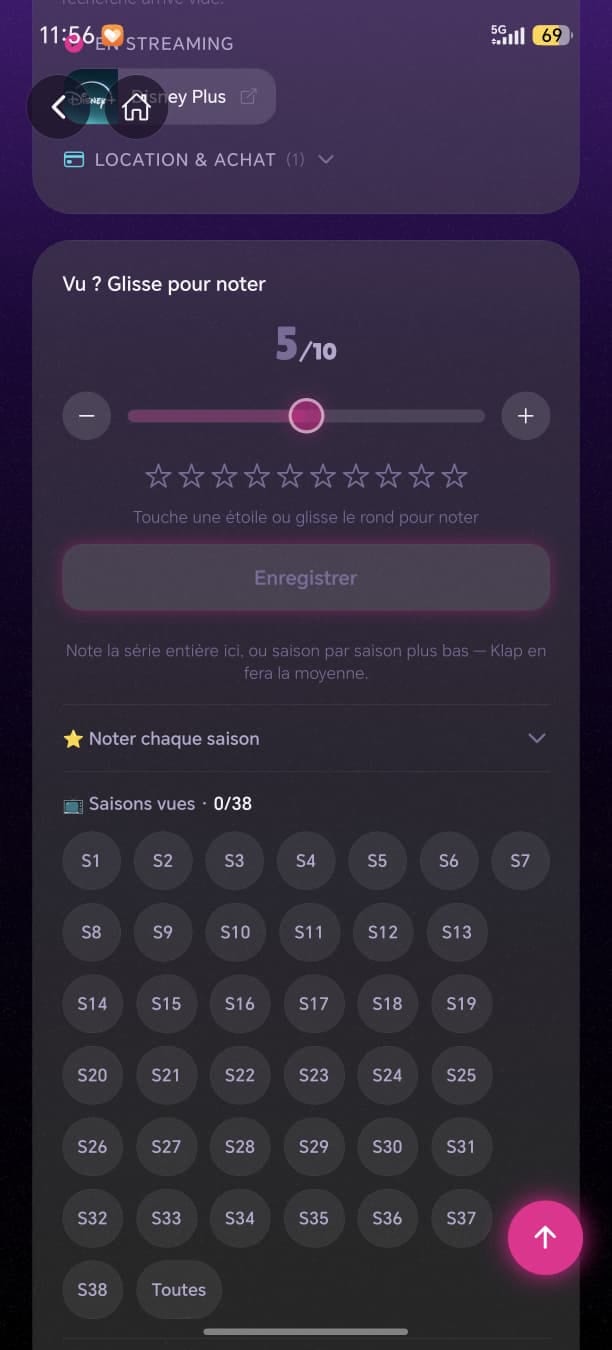
Before: opening each title page. After: a long press on the poster lets you rate without leaving the list.
An “on disc” status and DVD, Blu-ray, 4K UHD and audio format filters, with the format shown on the visuals.
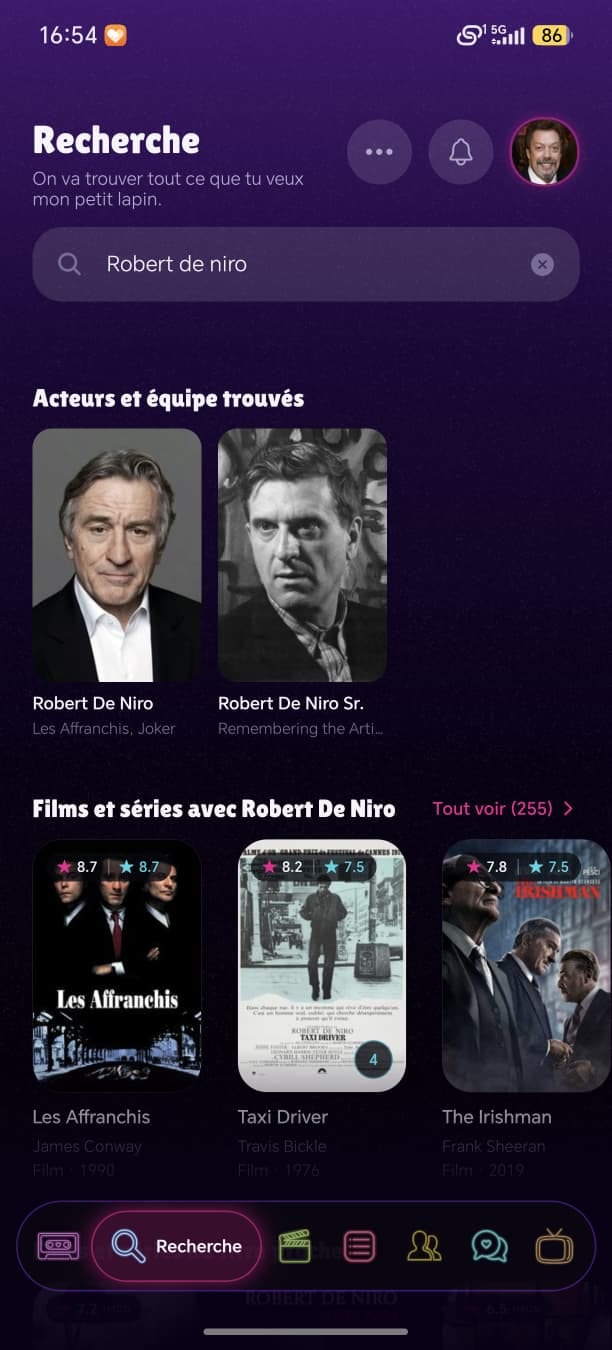
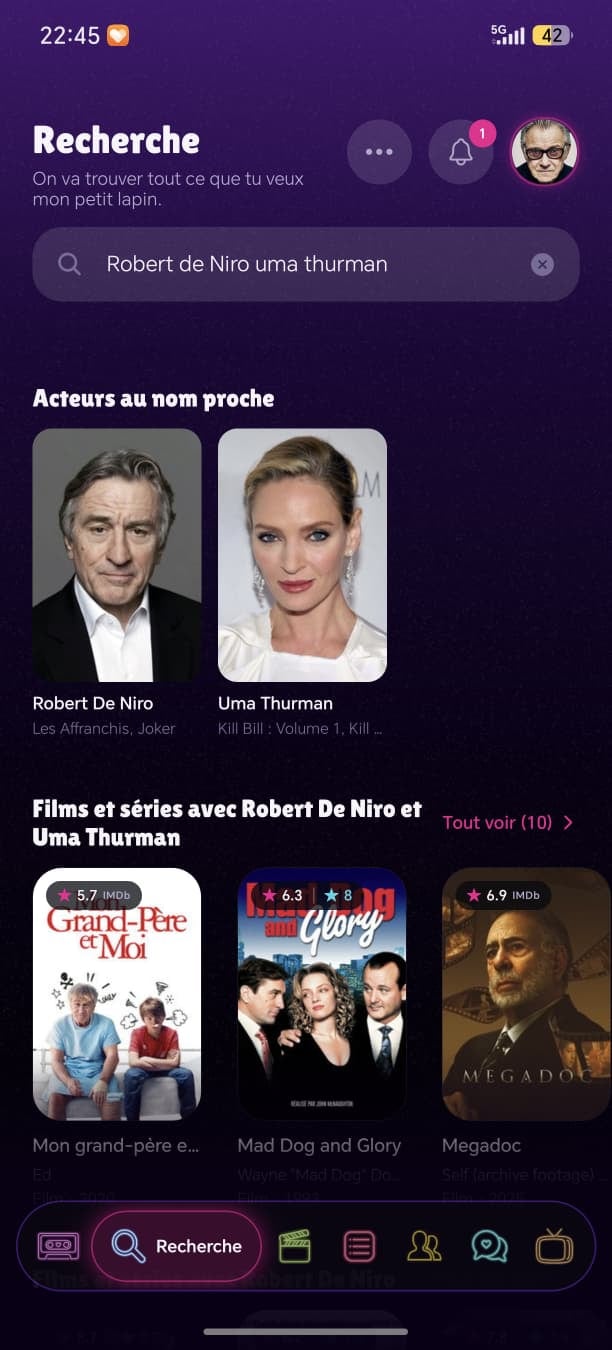
Search accepts several actors to find the films and series they appear in together.
Klap has been available on Google Play since one month after the first mockup. Five weeks after release, the console showed 10 installs and 11 active devices over the last 28 days, with no public rating and no launch communication.
These figures do not yet show broad adoption. The result documented here is a complete product that evolved with feedback.
I would test the journeys from the Figma prototype, before building the whole library. Then I would measure accepted picks, completed group votes and use of quick rating, to check whether Klap really makes choosing easier.