← Home·Case study
B2B and B2C · Freelance mission
Moon3D: visual identity, showcase website and management tool
A freelance mission for a 3D printing company, working directly with the owner, from the logo to the business tool.
- 3D modellingFrom several hours to a few minutesfor the models concerned
- Cost price calculationFrom about 15 to 5 minutesin a tool used every day
The problem
Incomplete quote requests, scattered across four channels.
My role
Sole designer: identity, showcase website, internal tool and AI feature.
My approach
Interviews and tests with the owner, rereading requests, Figma prototypes.
The result
Complete requests from 44.4% to 84.2%, cost price in about 5 minutes instead of 15.
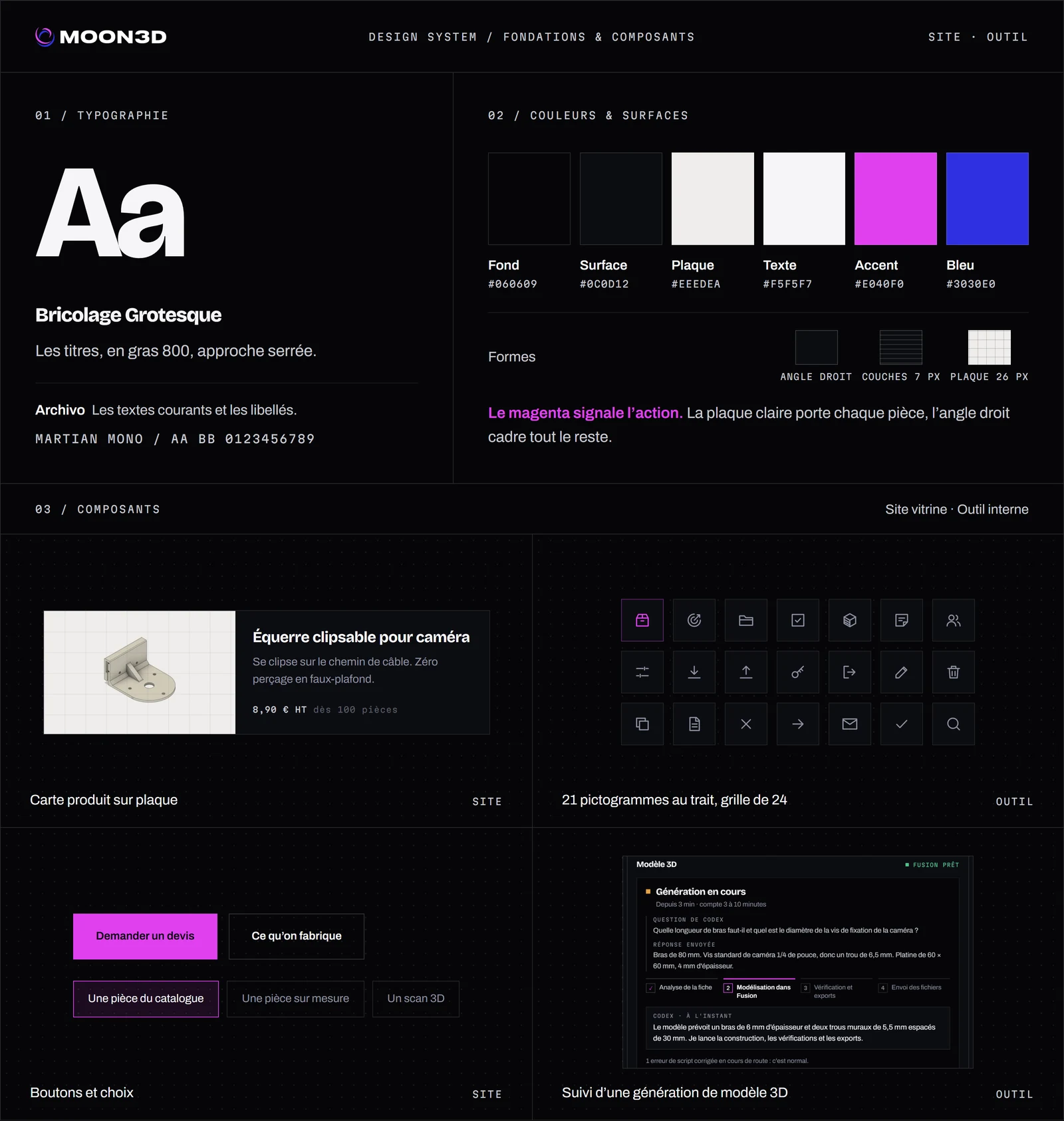
01Visual identity and design system
I defined the art direction, created the visual identity and the brand guidelines, then applied them to the website and the business tool.

Colours
- #060609Background
- #E040F0Accent
- #3030E0Blue
- #EEEDEAPlate
- #F5F5F7Text
Typefaces
- Bricolage Grotesque headings
- Archivo body text
- Martian Mono labels
A design system for the website and the tool
Colours, typography, shapes and components come together as one system, shared by the website and the internal tool, with a dark theme and a light theme. It is documented in Claude: tokens, writing rules, icons and components.
Social media posts
I also created posts for Instagram and LinkedIn, keeping the brand guidelines in mind. Flip a card to read its caption.
-
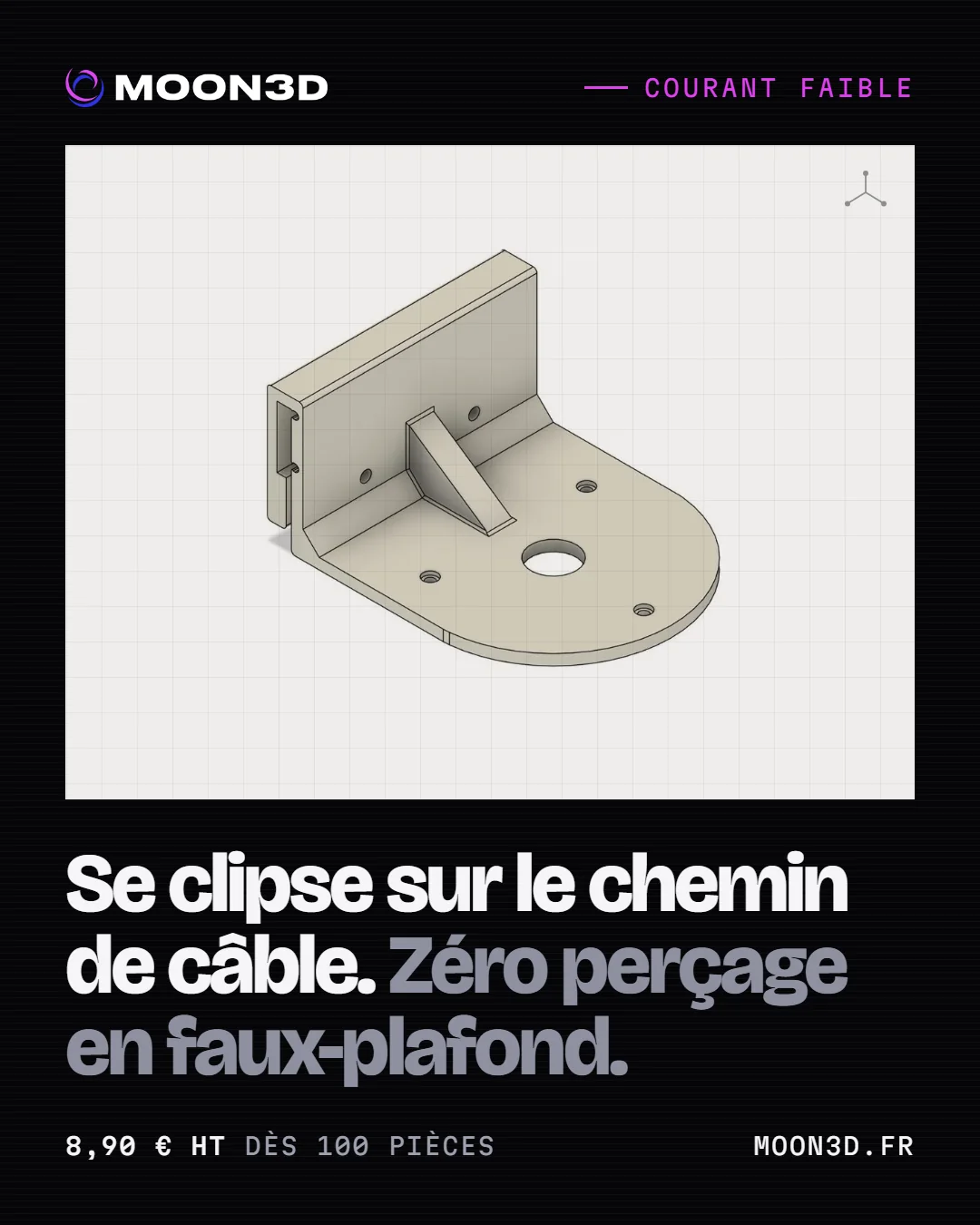
Instagram · 4:5 post
Mounting a camera on a cable tray without drilling the false ceiling: that’s what our clip-on bracket is for. Clip it on, screw in the camera, done. It comes in sizes to fit your equipment.
Caption translated from French
Instagram. The clip-on camera bracket. Enlarge
-
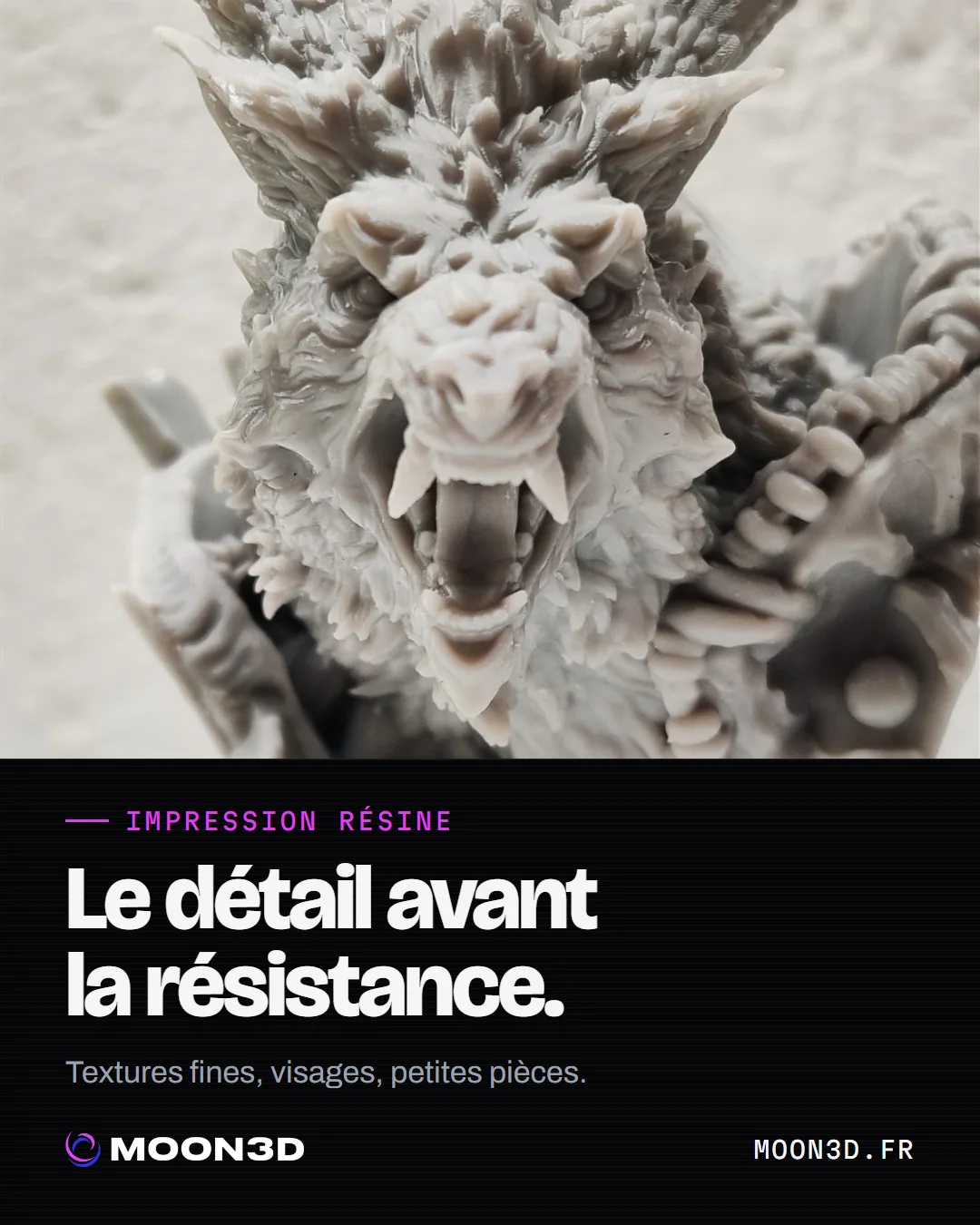
Instagram · 4:5 post
Resin captures what filament can’t: fine textures, faces, small parts. This bust was printed in several pieces, assembled, and can be hand-painted if you wish.
Caption translated from French
Instagram. Resin printing. Enlarge
-
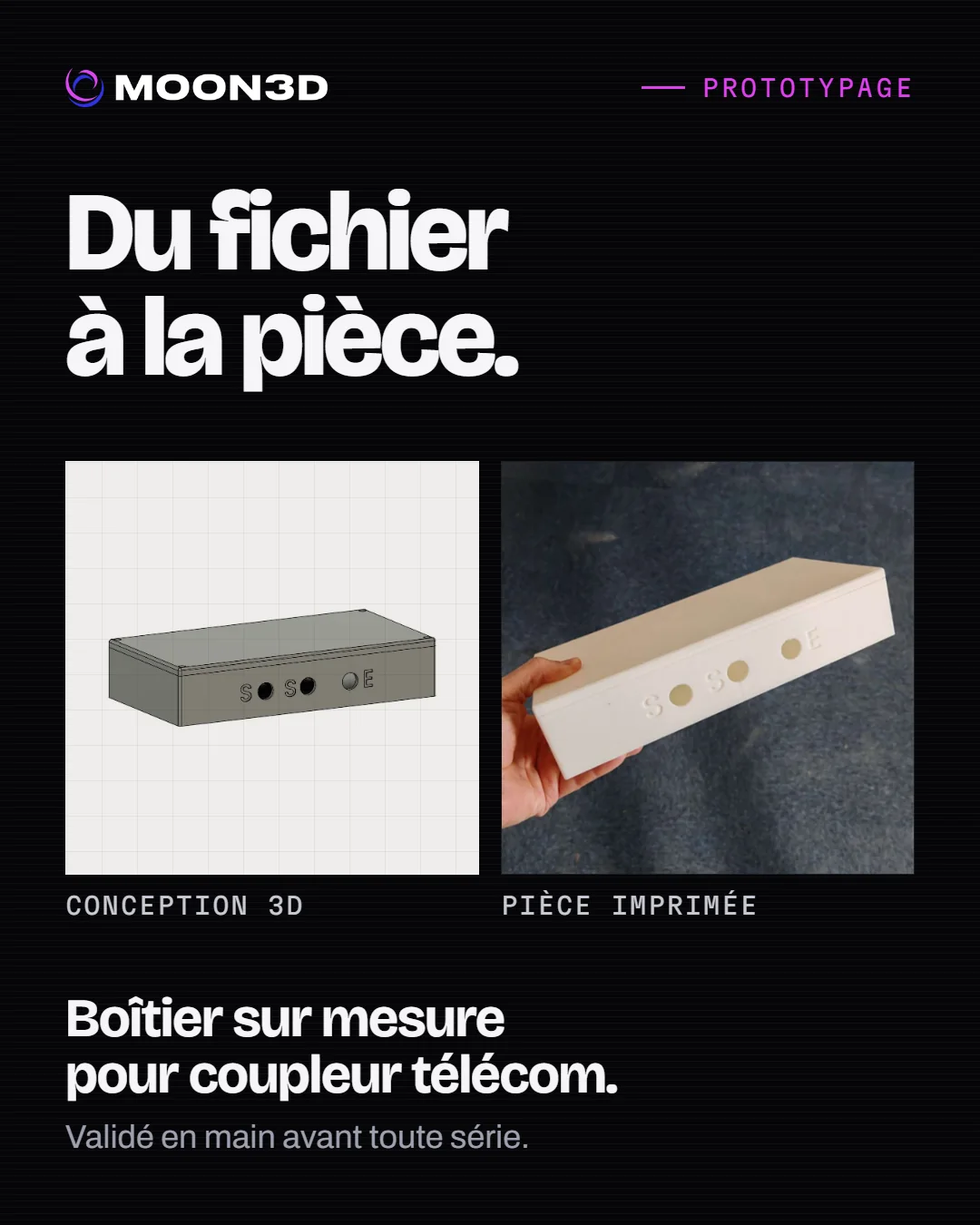
Instagram · 4:5 post
On the left, the 3D design. On the right, the printed part. A custom enclosure for a telecom coupler, drawn from the device it protects. Nothing goes into production before the first version is approved in hand.
Caption translated from French
Instagram. From file to part. Enlarge
-
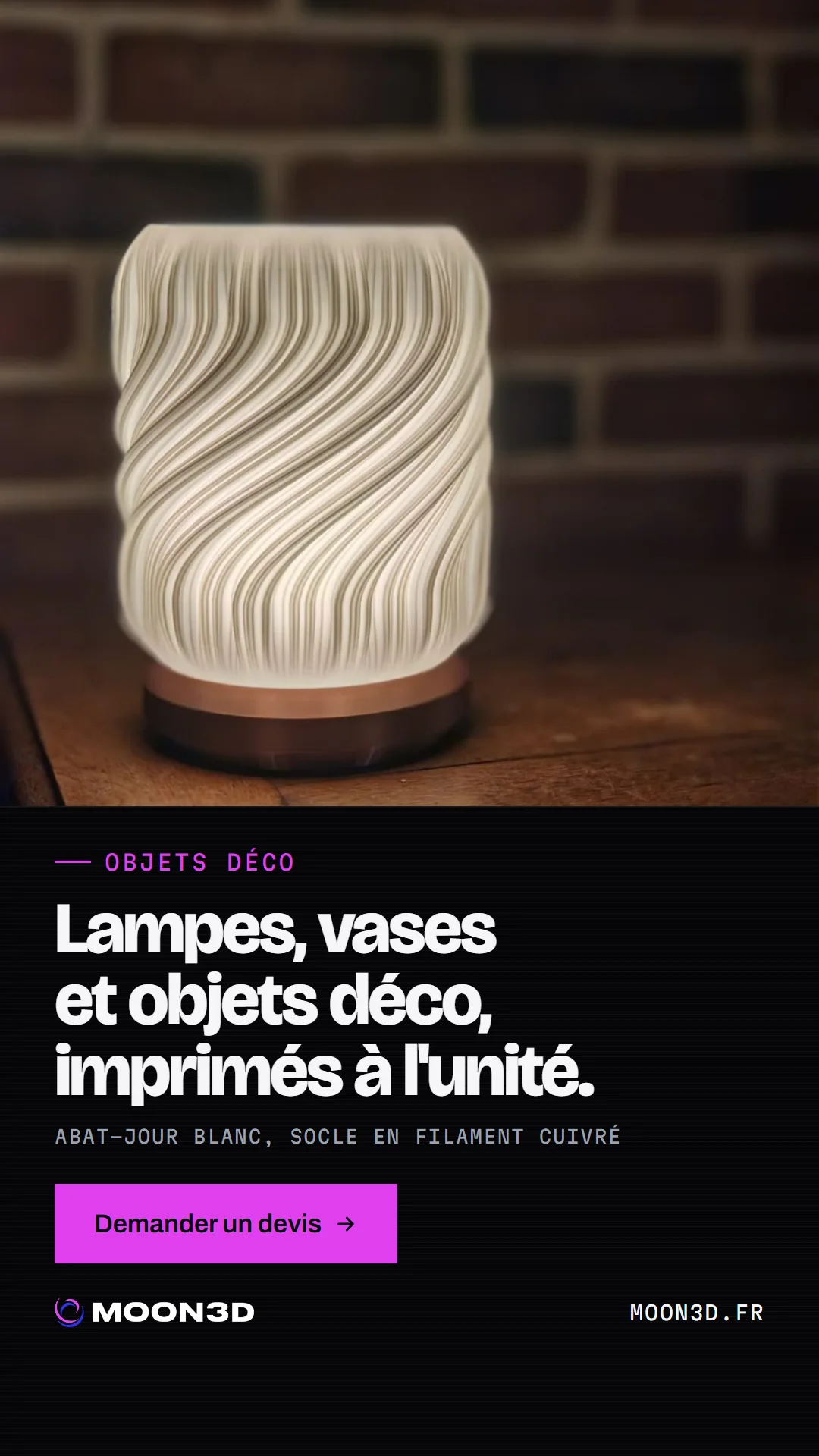
Instagram · 9:16 story
A story with no caption. A link sticker to moon3d.fr sits on the “Request a quote” button.
Caption translated from French
Instagram. Decor objects. Enlarge
-
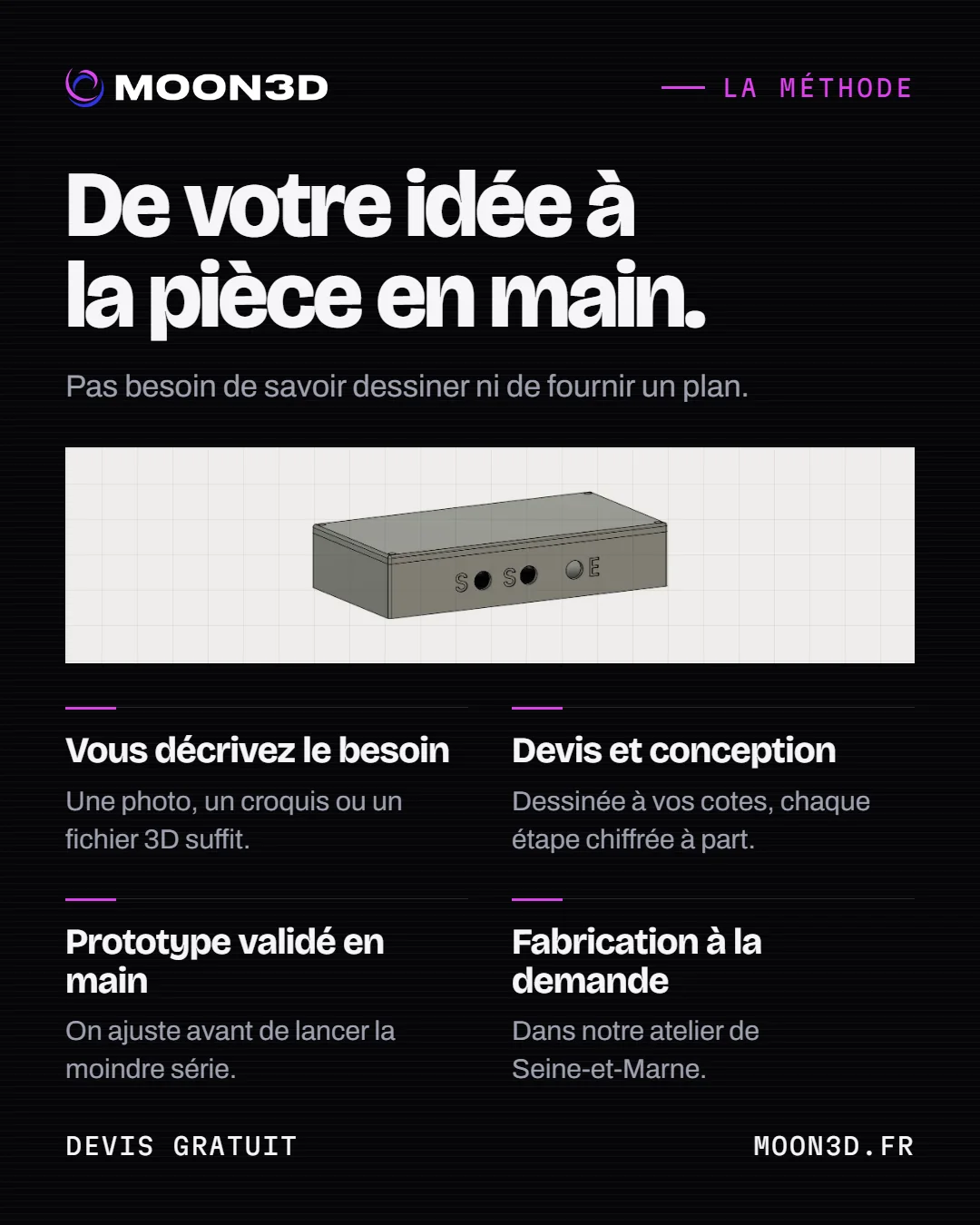
LinkedIn · 4:5 post
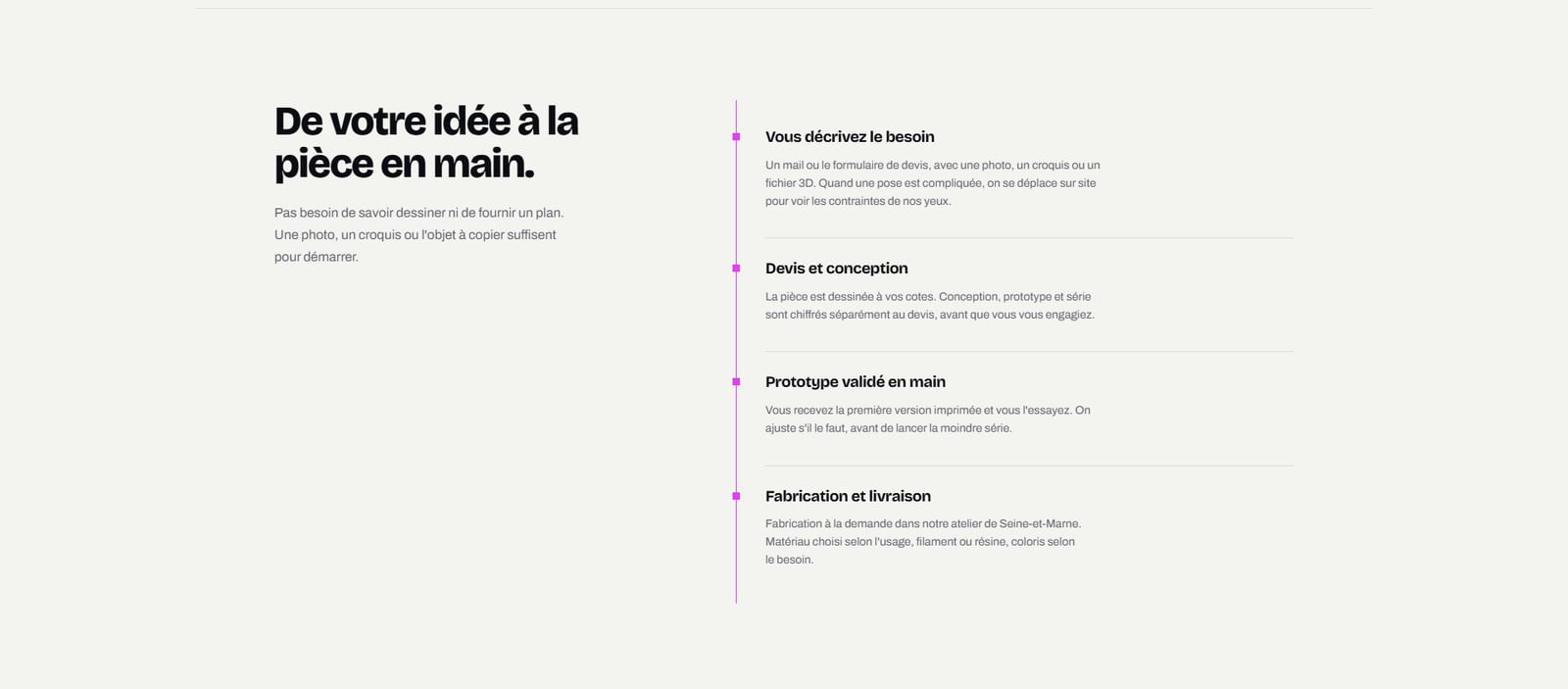
No need to draw or provide a plan to get a part made. A photo, a sketch or the object to reproduce is enough to start. Every project follows the same path: you describe the need, we design the part to your dimensions, you approve a prototype in hand, then we make it to order in our Seine-et-Marne workshop. The quote is free and with no commitment: moon3d.fr
Caption translated from French
LinkedIn. The method, in four steps. Enlarge
-
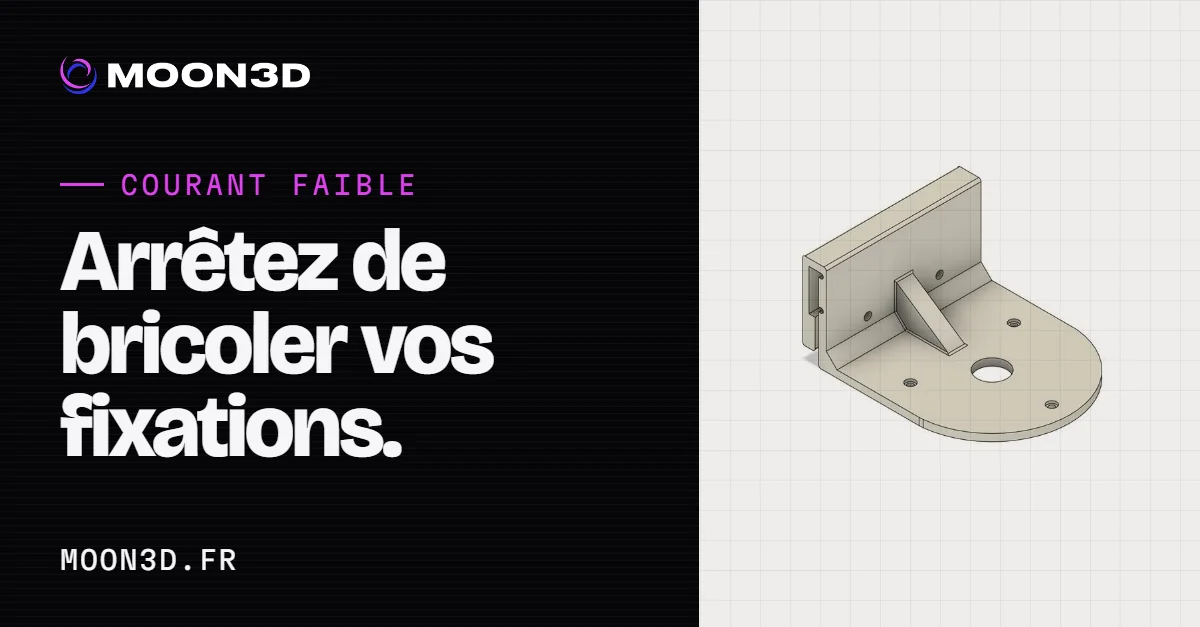
LinkedIn · landscape post
Low-voltage installers: your mounts no longer need to be improvised on site. Brackets, supports, enclosures and covers 3D printed for video surveillance, telecom and access control, made to fit your equipment. The full range: moon3d.fr
Caption translated from French
LinkedIn. Mounts for low-voltage installers. Enlarge
02Showcase website
Organising the content, presenting the services and the quote request journey, for individuals and professionals.
The problem
Requests came in through Instagram, Facebook, phone and e-mail, often without dimensions, quantity or usage constraints. Several exchanges were needed before quoting, for professionals and individuals alike.
What I analysed
I reread the requests received to spot what was missing: dimensions, support, indoor or outdoor, heat, quantity. These needs structured the form.
One main action: request a quote
Every page presents the offer, past work and the same action: requesting a quote. We ruled out a cart, because the price depends on the part and the quantity.
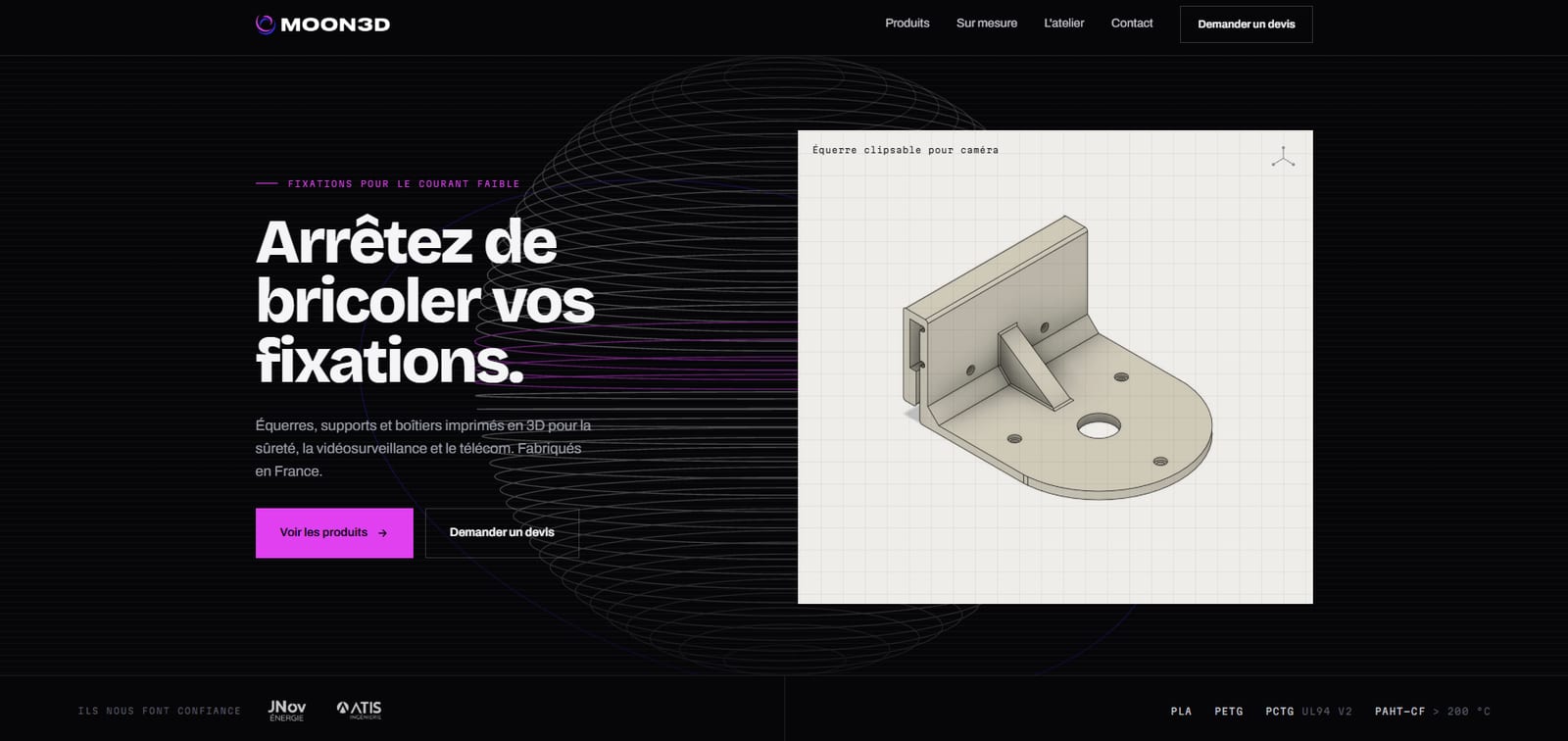
See the other pages of the site
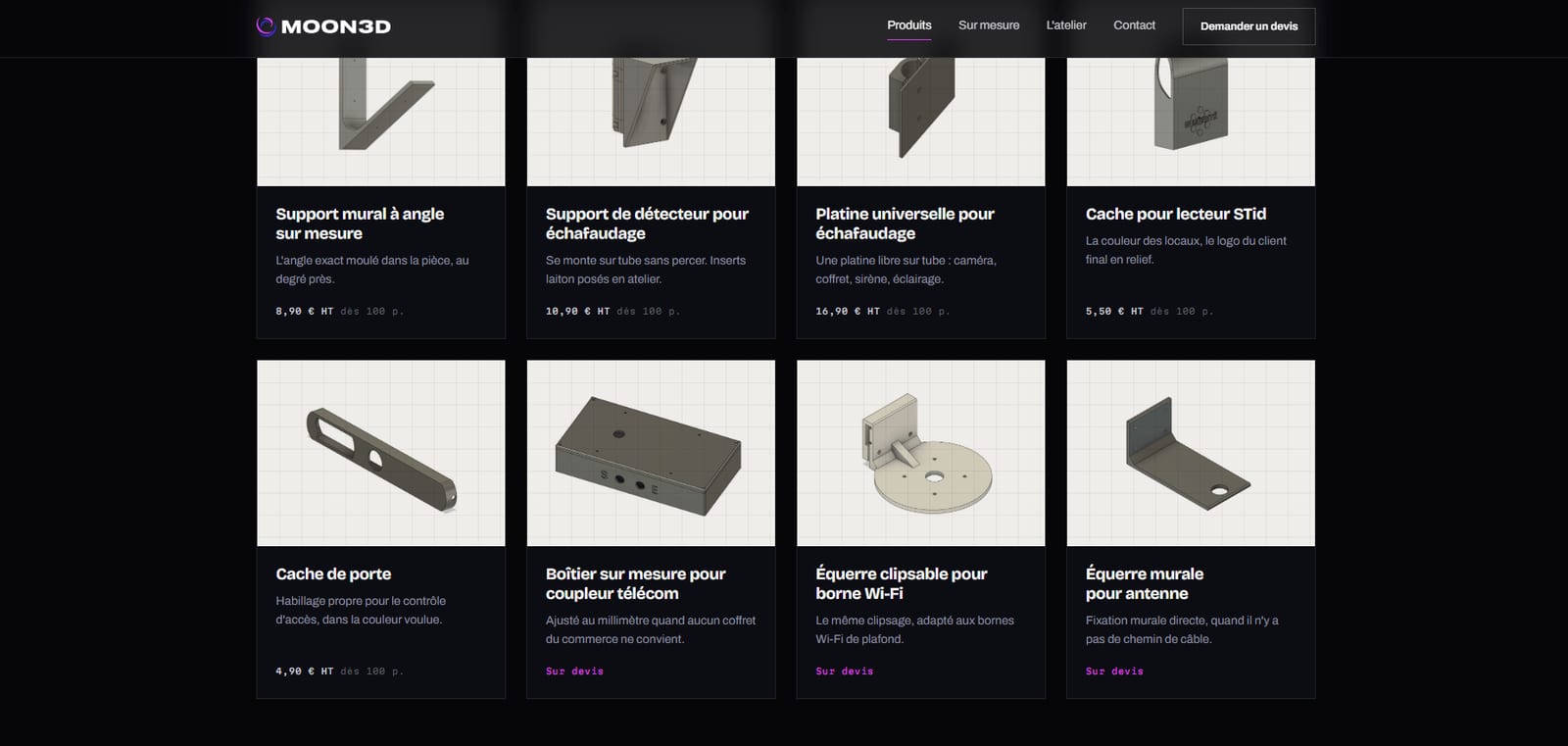
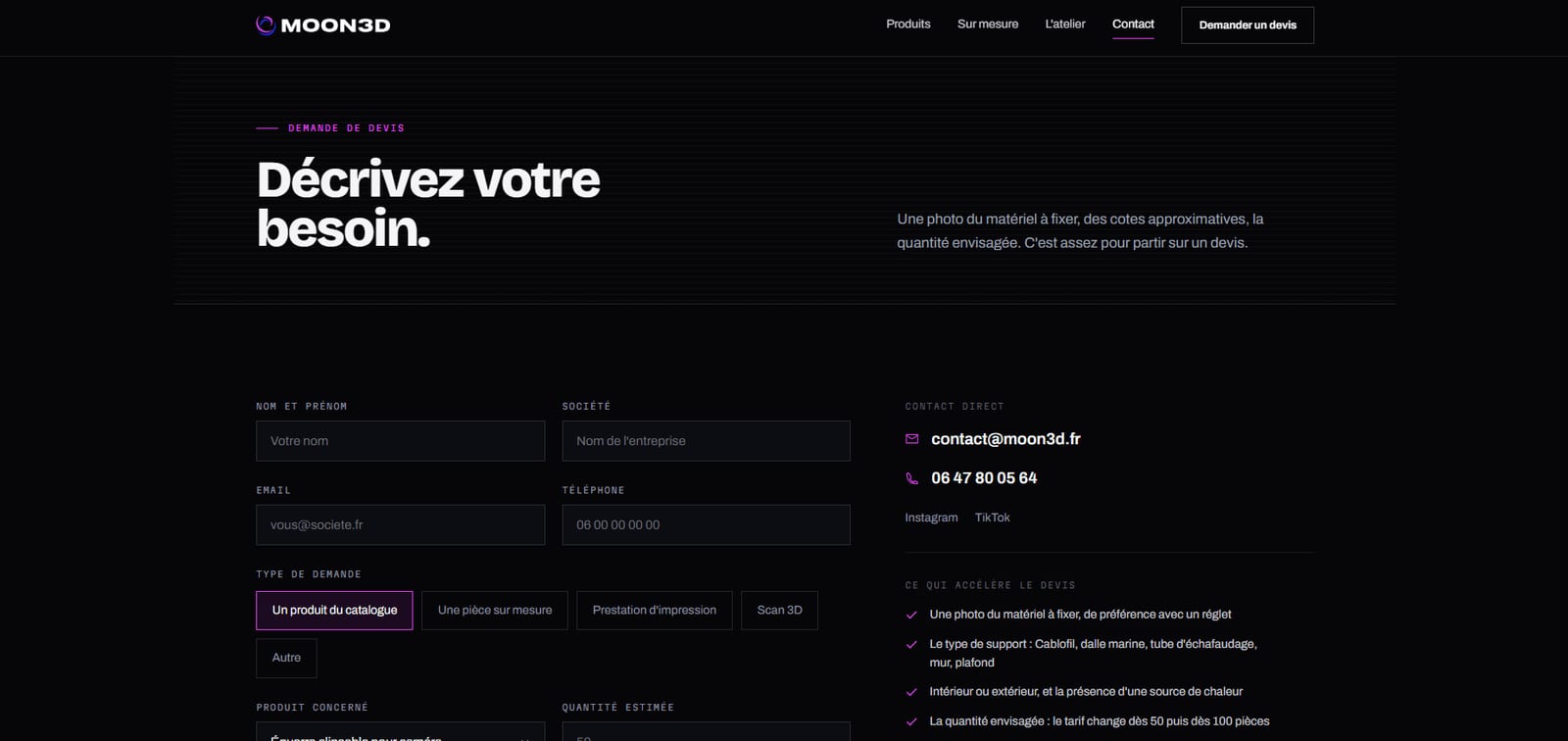
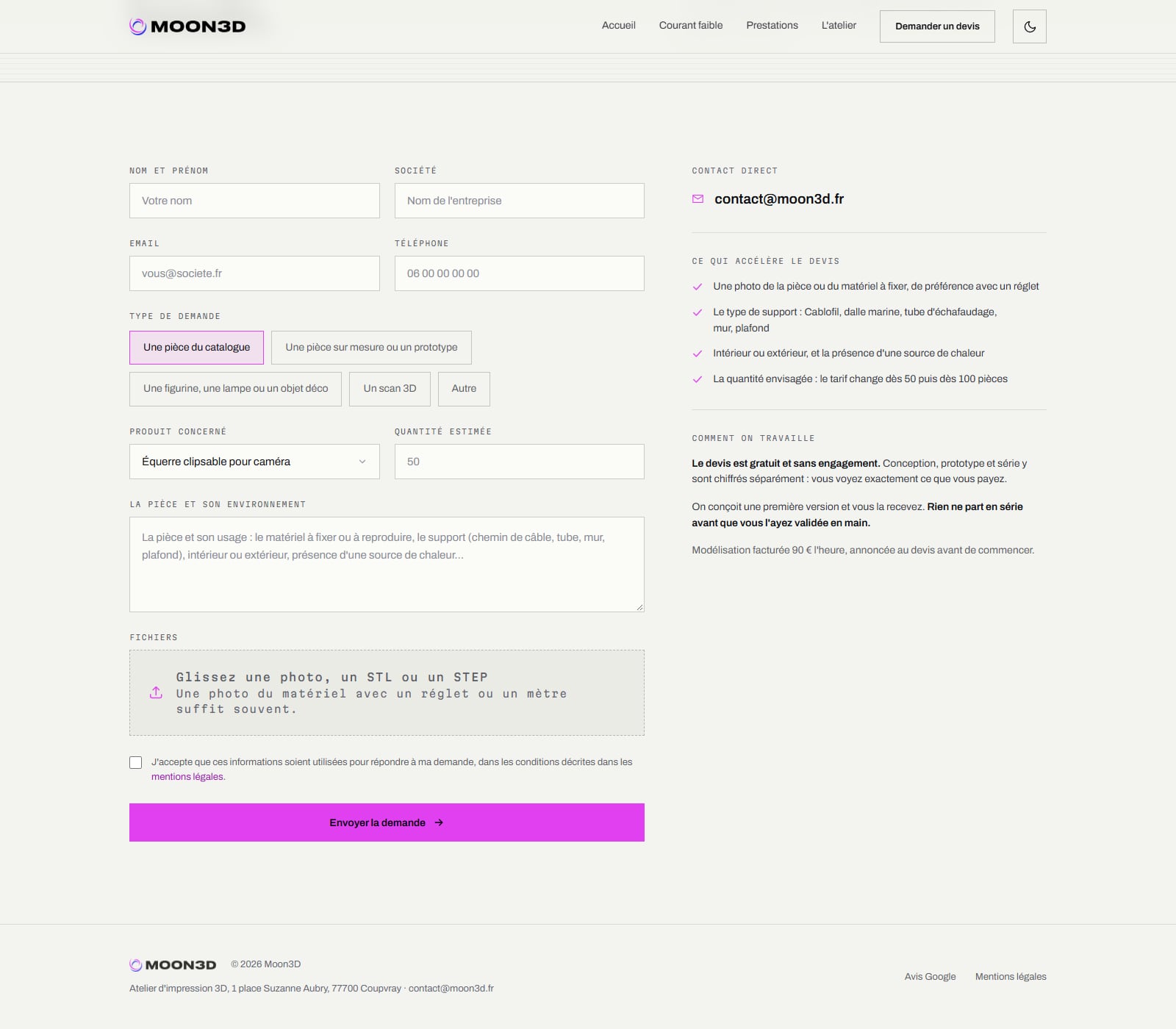
A form that prepares the quote
Request type, part, quantity, environment, photo or 3D file: the fields ask the owner’s questions, with an example answer. Quantity comes first, because prices change from 50 then 100 parts.
The journey, before and after
Before
- 1Message or call
- 2Missing information
- 3Follow-ups
- 4Quote
3.3 exchanges on average before the quote
After
- 1Guided form
- 2Request check
- 3Quote
1.4 exchanges on average before the quote
Showcase website results
Count made with the manager in the messaging apps, e-mails and form submissions, before and after launch:
| Measure | Before the site | After |
|---|---|---|
| Quote requests a month | 9, across four channels | 19, 14 of them through the form |
| Complete requests, photo or file, quantity, mounting surface | 44.4% | 84.2% |
| Exchanges before sending a quote | 3.3 | 1.4 |
| Time from request to quote | 3.6 days | 1.5 days |
| Quotes turned into orders | 22.2% | 36.8% |
| Visitors who send a request | no site yet | 3.5% |
Monthly requests include all channels. Low volumes and the before/after comparison mean these figures should be read as a first assessment, without isolating the effect of the design.
03Internal management tool
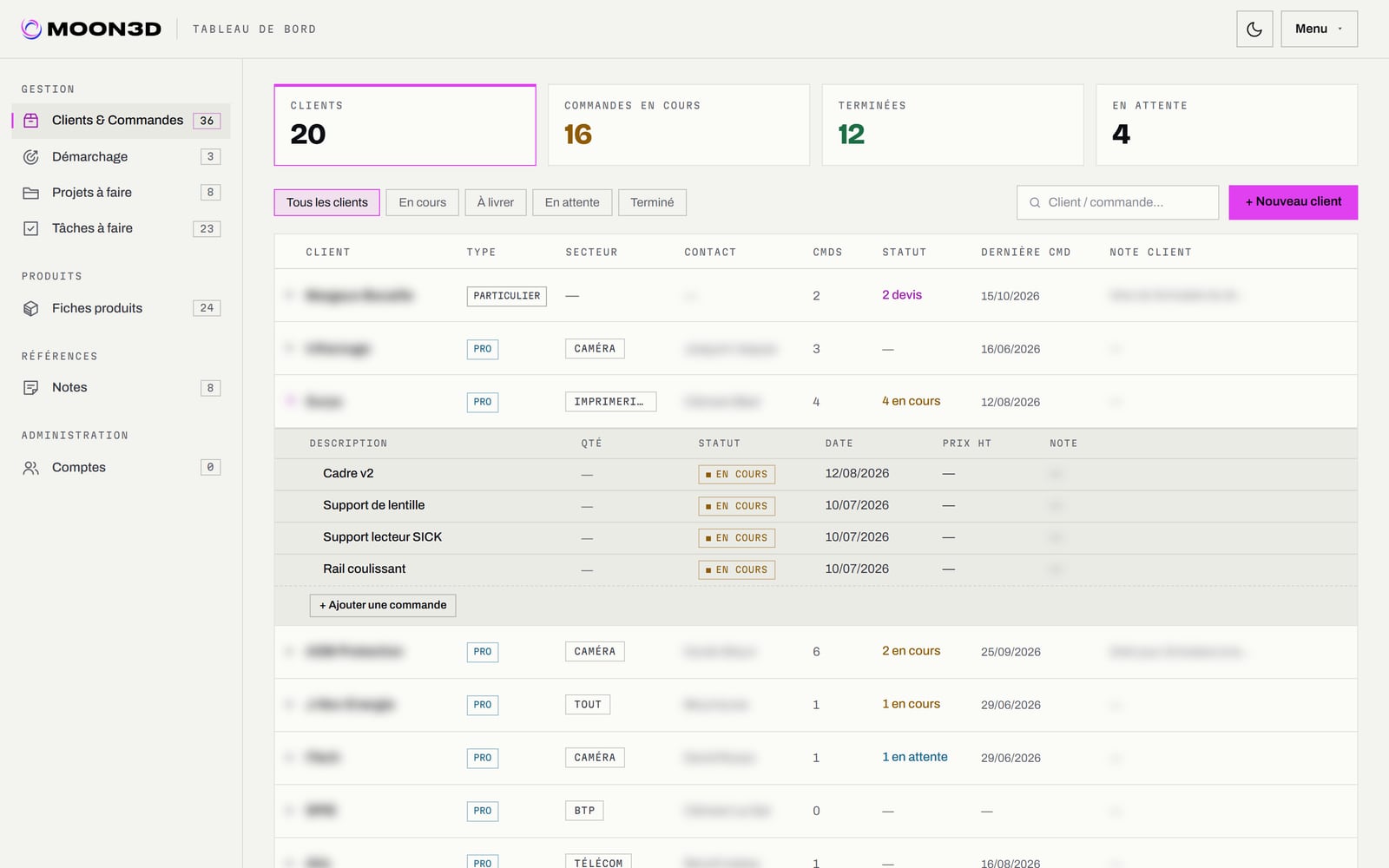
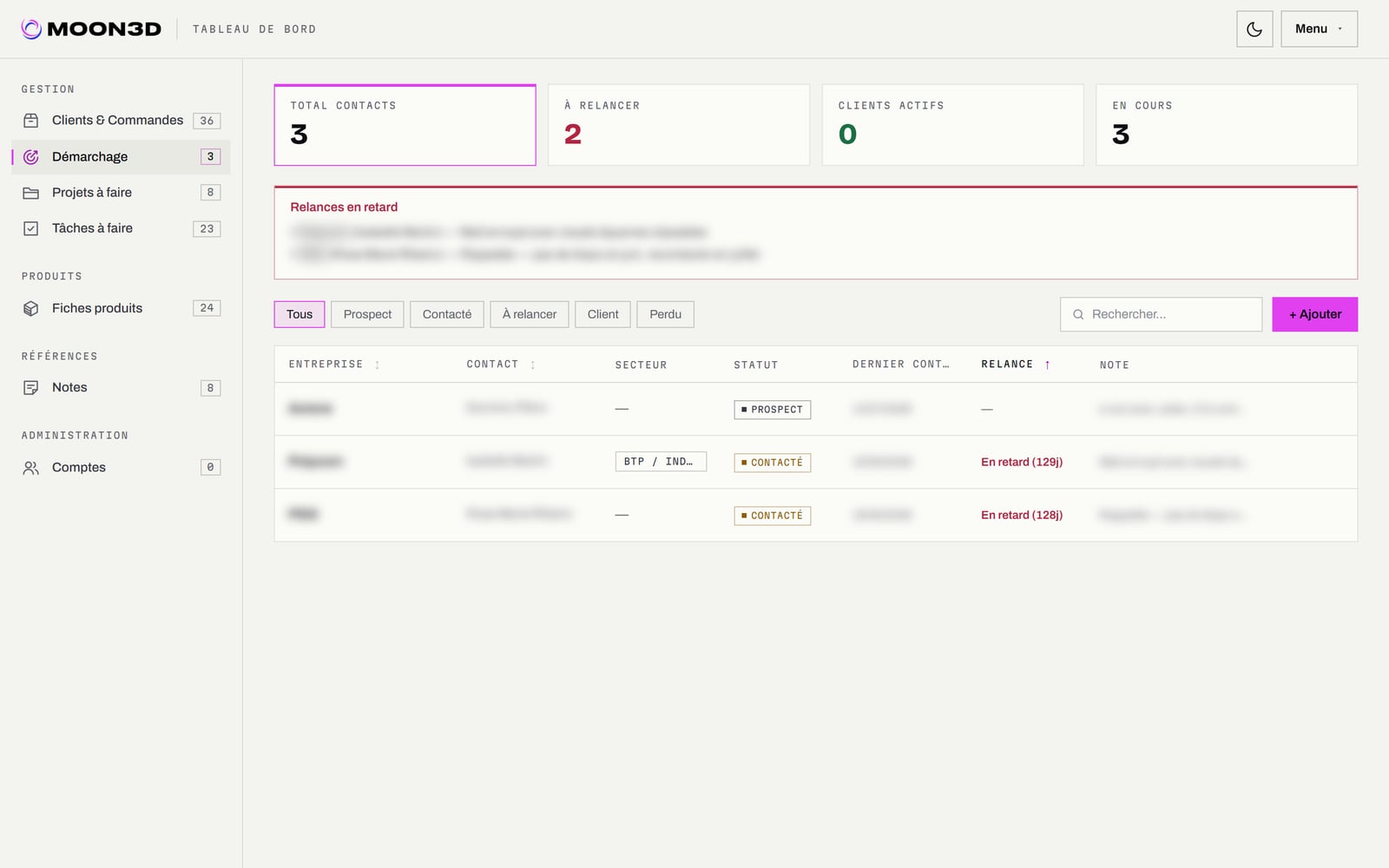
An internal tool designed with the owner for daily work: customers, orders, costs, stock and partial deliveries. Tested with the owner, then improved through daily use.
Cost price calculation: from about 15 to 5 minutes, in a tool used every day.
See the other views of the tool
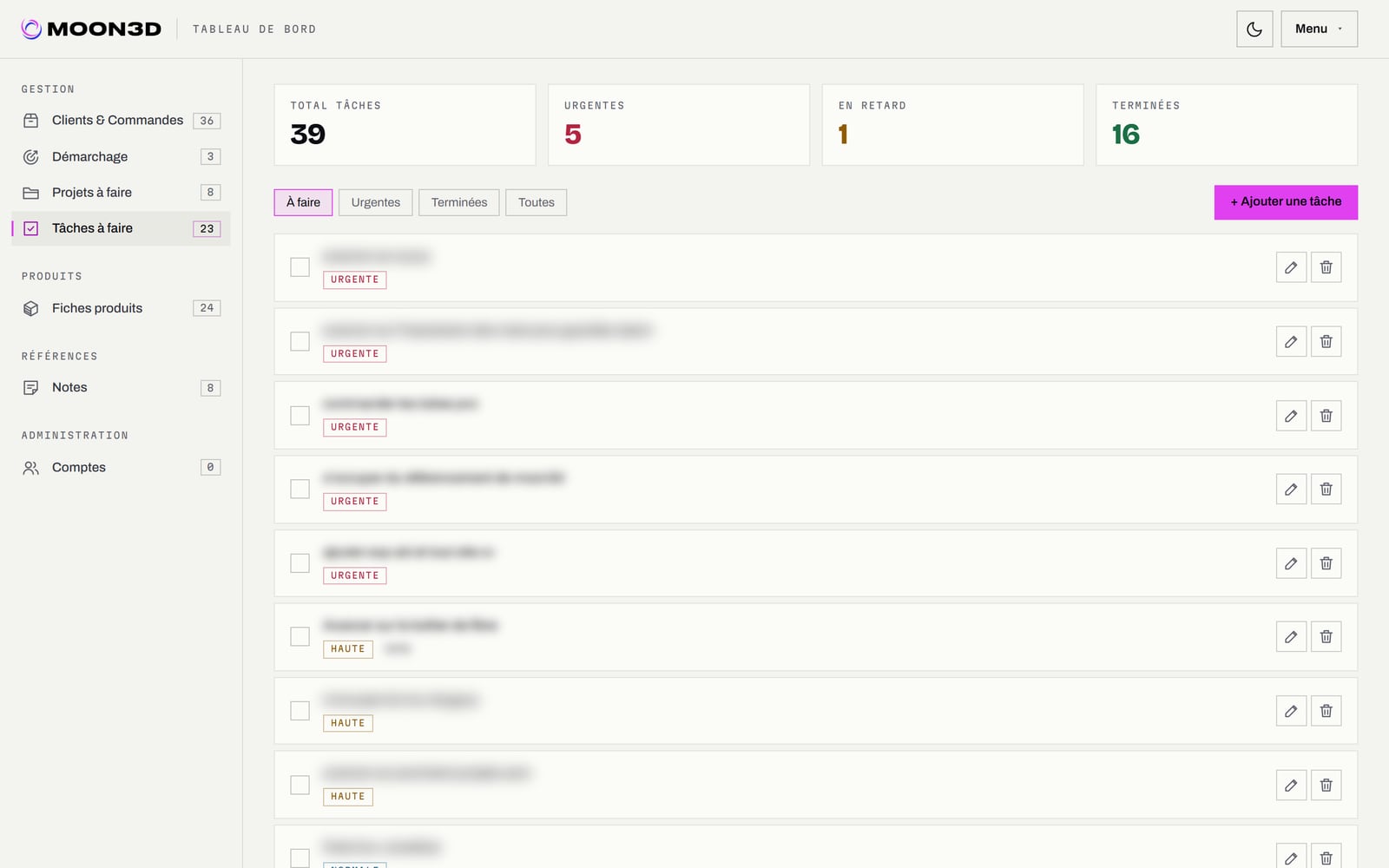
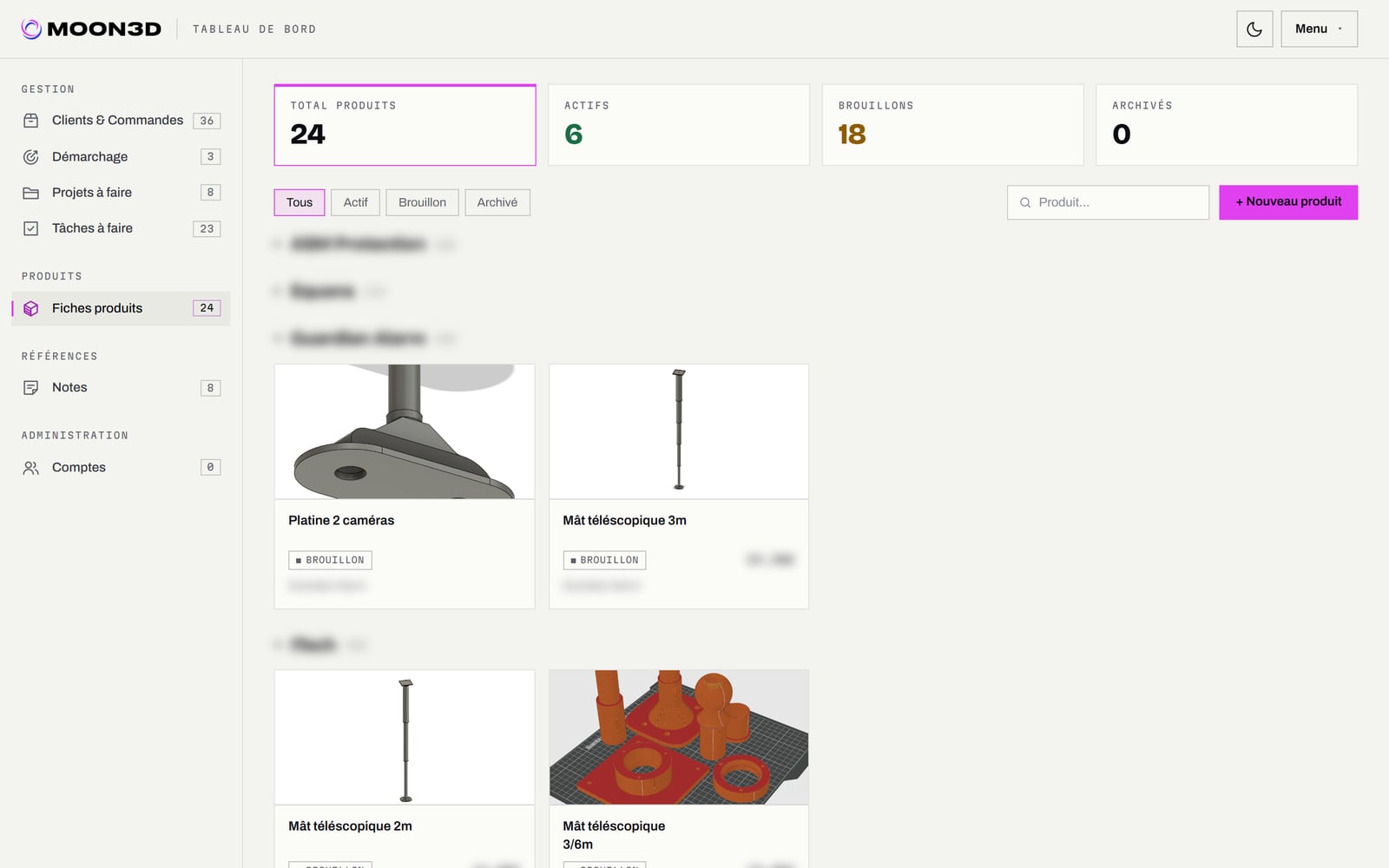
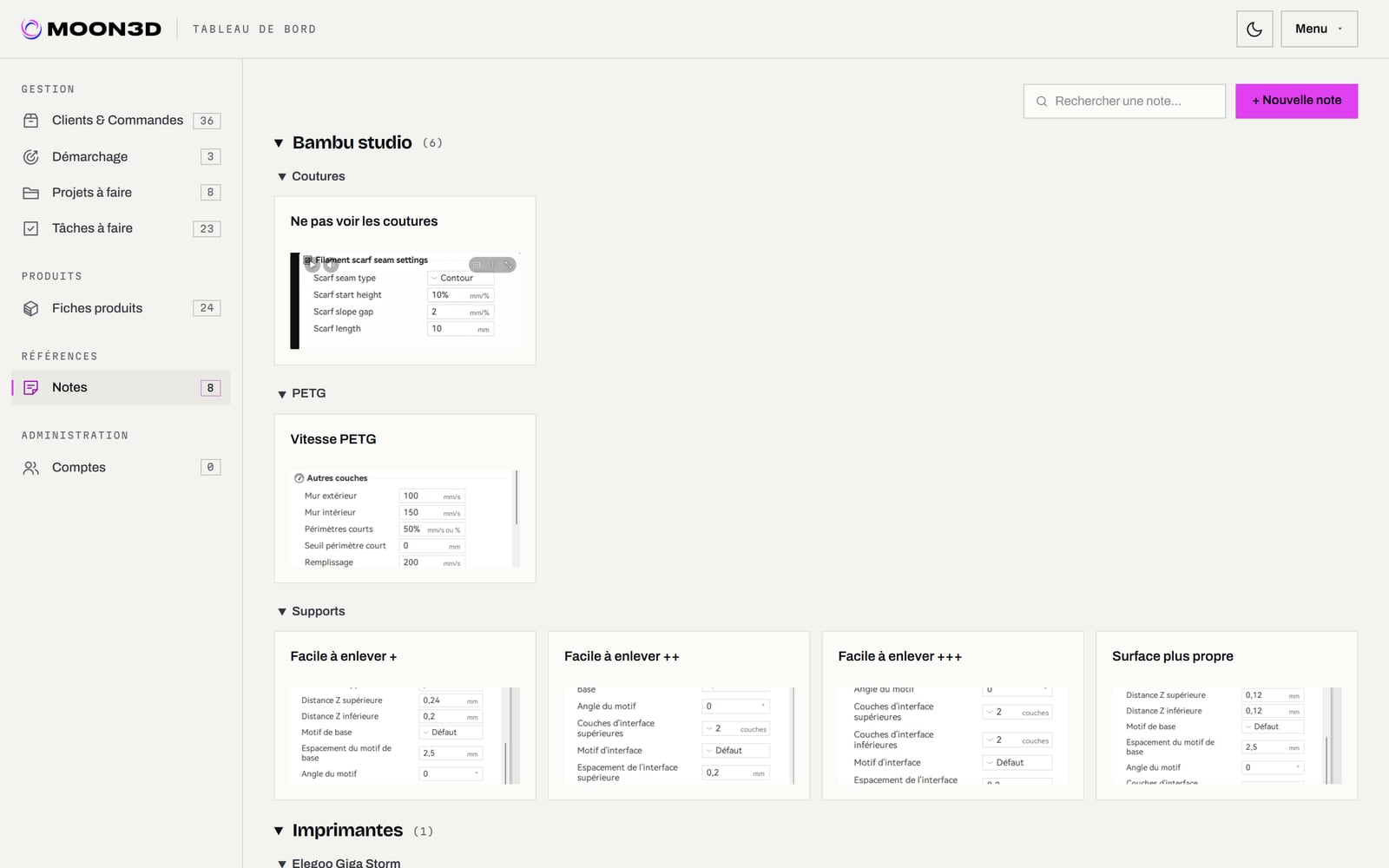
Customer names, contacts and sensitive information are blurred.
04From request to 3D model, with human validation
I designed a journey where the owner validates what needs to be modelled before generation. Claude orchestrates the request, then Codex models the part in Autodesk Fusion 360. For the models concerned, modelling goes from several hours to a few minutes.
- 1Request
- 2Product description
- 3Owner’s validation
- 4Generation in Autodesk Fusion 360
My role: understanding the need, designing the journey and the interfaces, then improving them through iterations.
05What I learned
I would measure drop-offs between the product pages and the form submission, then test a less technical journey for individuals. I would also explore an automatic reply listing the missing information.